


Travel · Türkiye
Along Türkiye’s Turquoise Coast, the Slow Art of the Blue Voyage
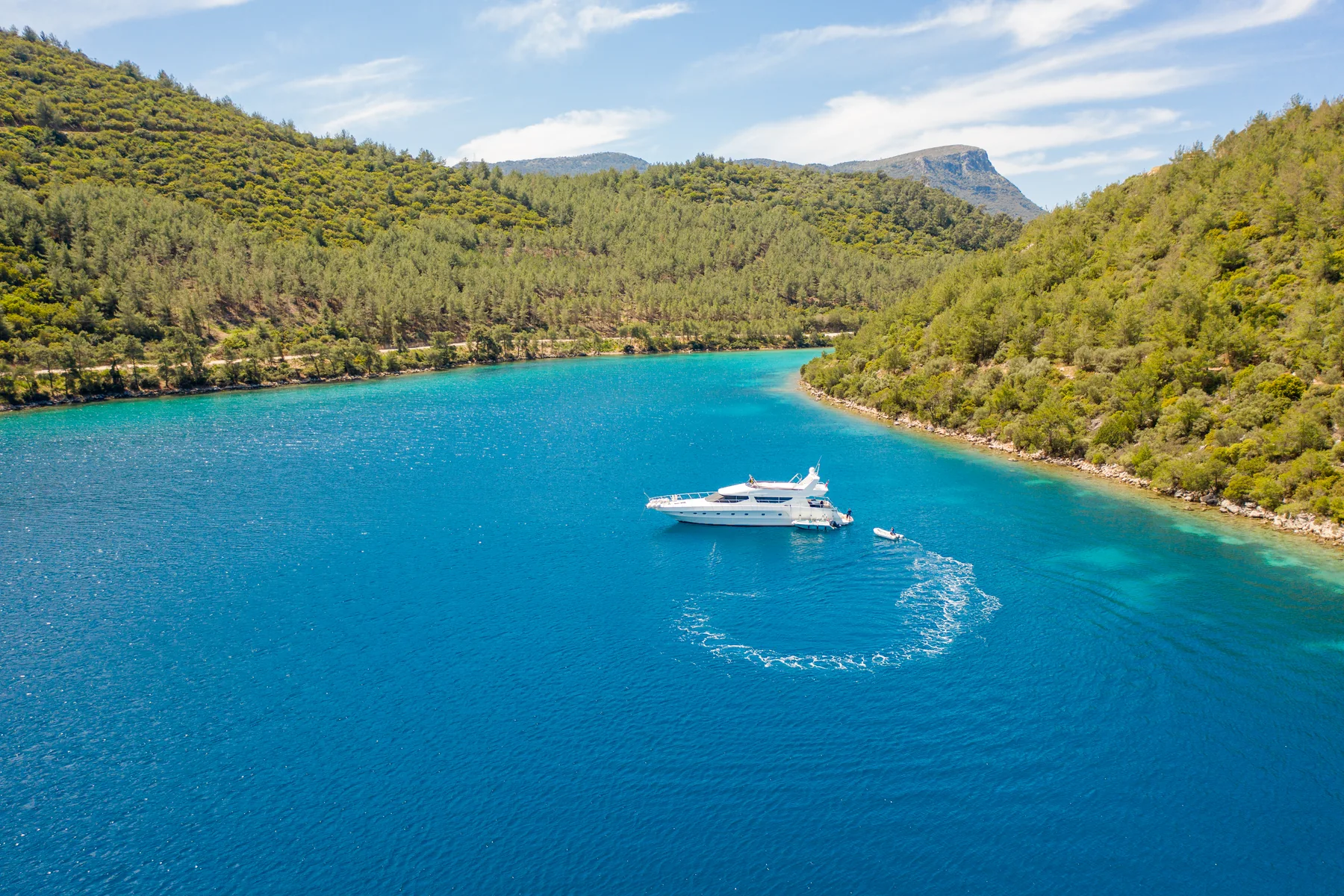
The Blue Voyage has a name in Turkish, Mavi Yolculuk, and a rhythm that has little to do with getting anywhere quickly. It is the old practice of sailing the country’s Aegean and Mediterranean shore aboard a wooden gulet, dropping anchor in one cove for lunch and another for the night, letting the coastline set the pace. From Çeşme in the north to the sunken city of Kekova in the south, this is Türkiye seen the way it was meant to be seen, from the water.
Why the Sea
A Coast Made for Slowness
There is a reason the sea does this to people. Time on the water, the gentle argument goes, resets something in us, and the idea now has a name. The marine biologist Wallace J. Nichols called it the Blue Mind, the calmer, more settled state he associated with being near, in, or under water. On a Blue Voyage that becomes a daily practice rather than a promise: mornings that begin with a swim off the back of the boat, afternoons measured in the colour of the water, evenings when the loudest sound is the anchor chain.
The Turquoise Coast earns its name honestly. The Aegean and the Mediterranean meet here along a shoreline of pine-backed bays, Lycian ruins and villages that still keep the fishing calendar, and a gulet turns all of it into a single unhurried journey.
İzmir & Çeşme
Where the Coast Begins
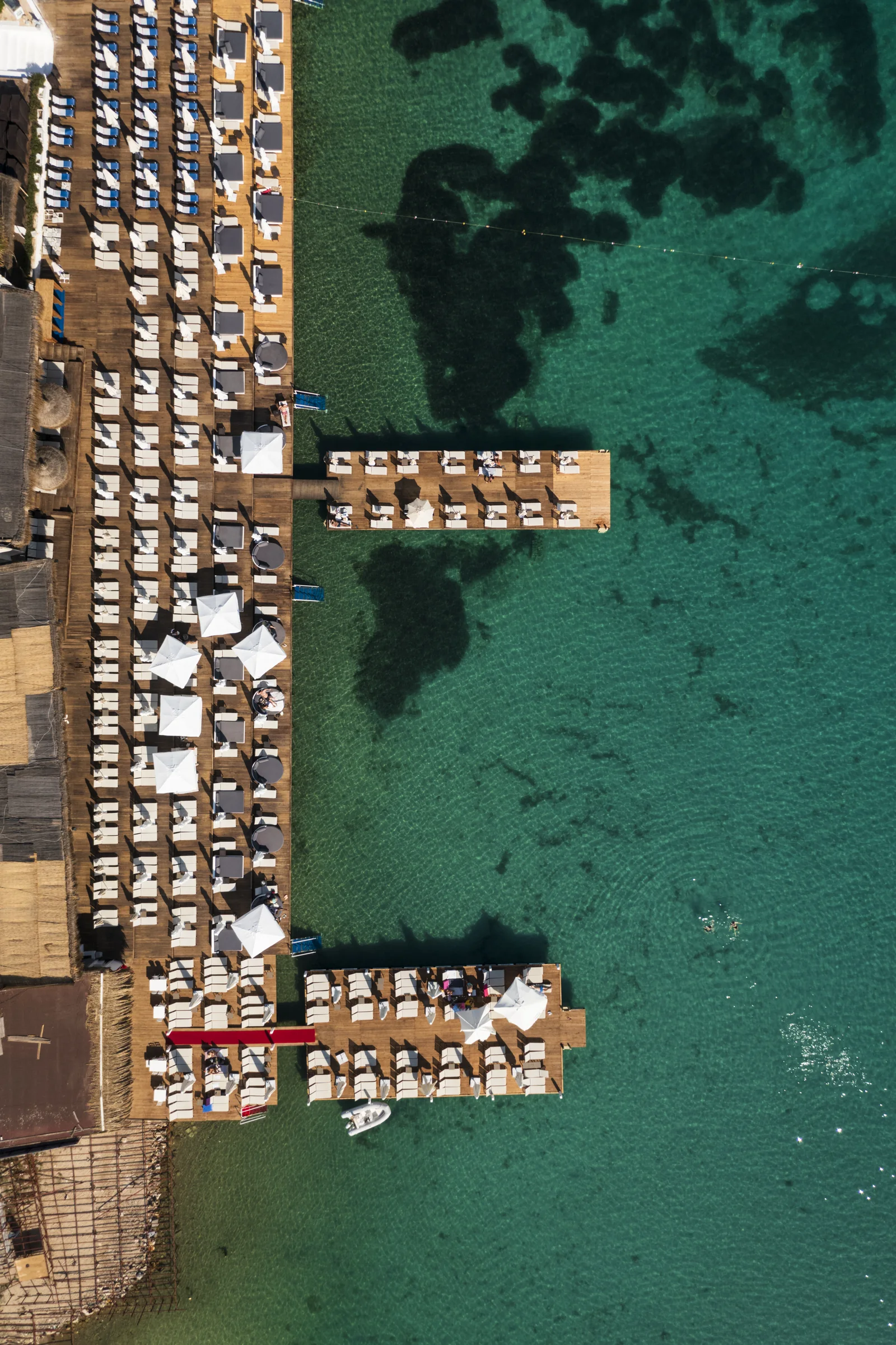
Many voyages begin at Çeşme, the breezy İzmir peninsula of whitewashed streets and beach clubs, where a day drifts from a swim to a long lunch and back to the water.
Bodrum
Between Sea and Stone
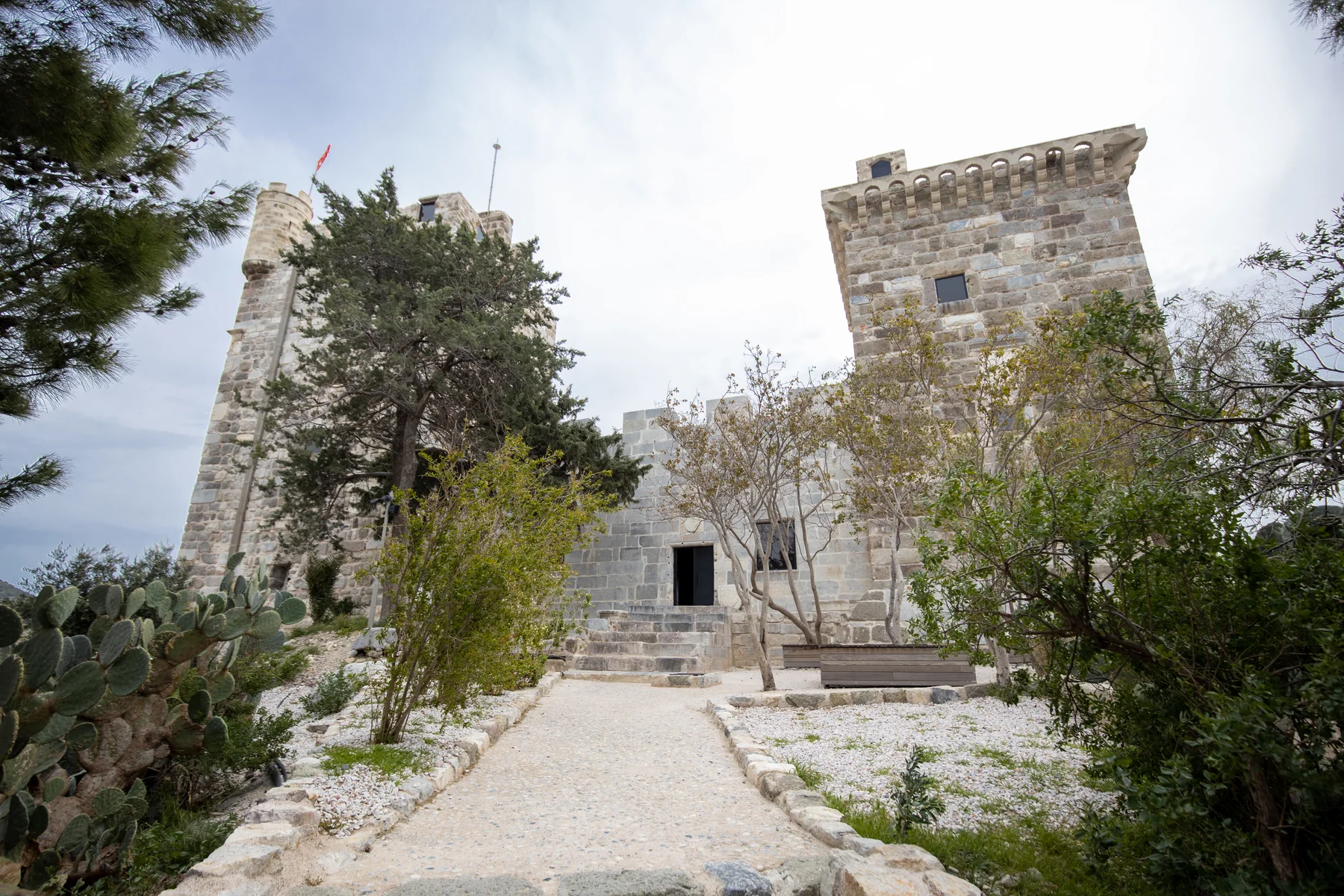
South of İzmir the coast tightens into Bodrum, the peninsula that has done more than anywhere to give the Turkish summer its glamour. Its harbour is watched over by a fifteenth-century Crusader castle that now holds the Bodrum Museum of Underwater Archaeology, one of the most significant collections of ancient shipwreck finds in the Mediterranean, according to the museum. It is the rare cultural stop you can reach by tender.
Datça & Gökova
The Bays Grow Wilder
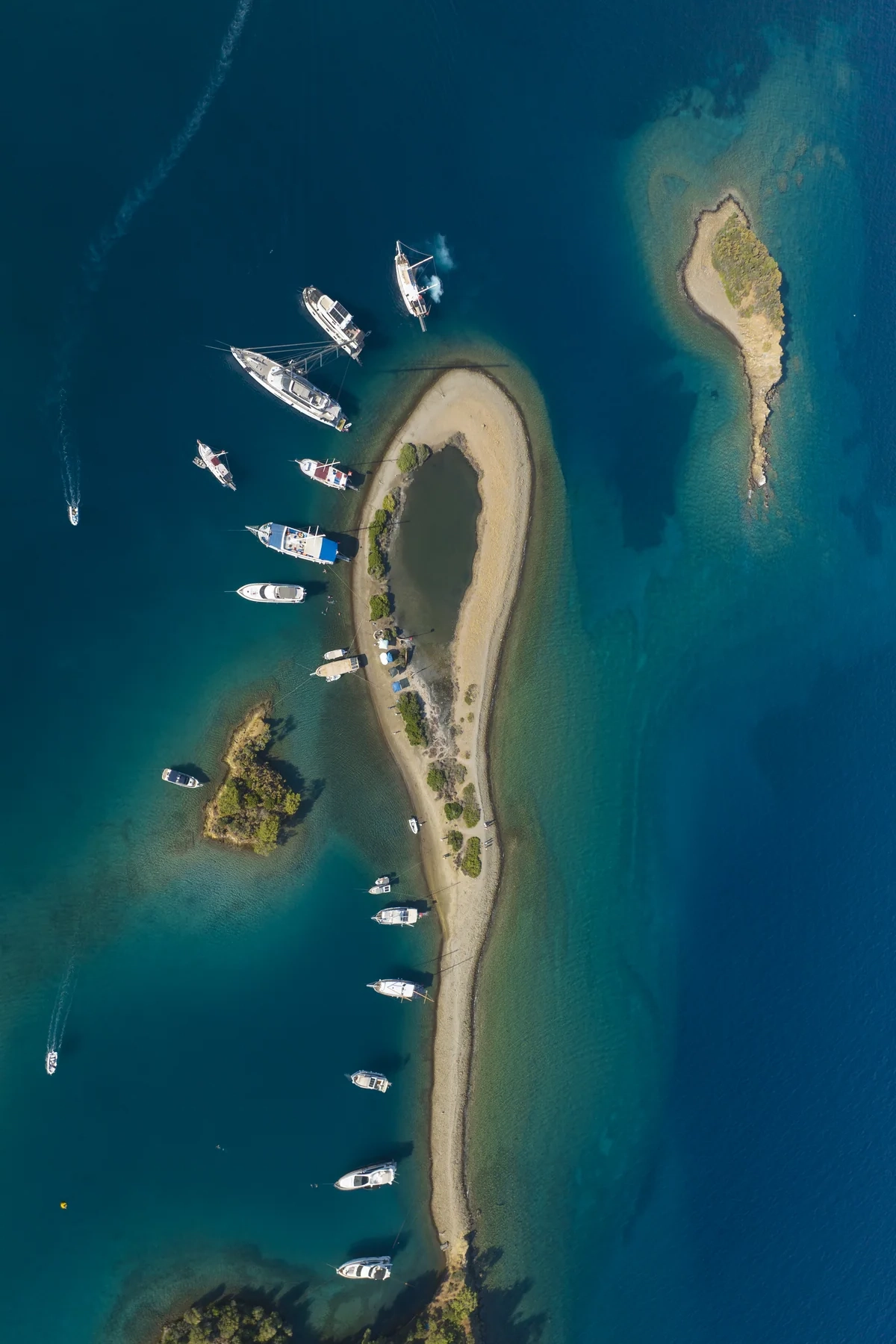
East into the Gulf of Gökova the coast empties out, its sandbars and pine islands the domain of sailors, reached by water long before any road arrives.
Göcek & Fethiye
The Turquoise Heart
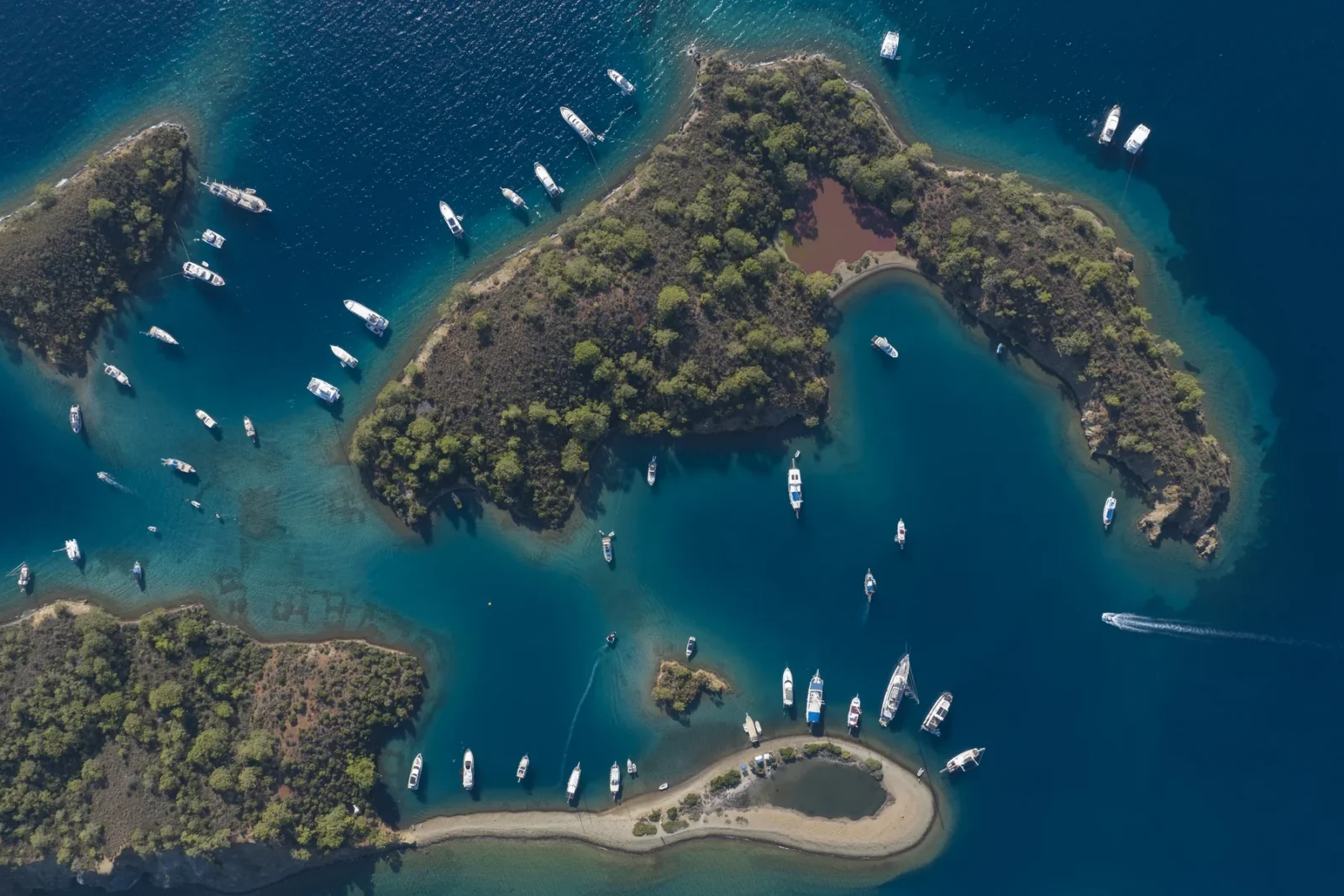
If the Blue Voyage has a heart, it beats around Göcek and Fethiye. Göcek is a small, deliberately low-rise town that has become the region’s yachting hub, its bay scattered with wooded islands and quiet inlets that seem made for anchoring. There are no towers here by local rule, only marinas, umbrella pines and the boats that come for them.
Fethiye
The Blue Lagoon
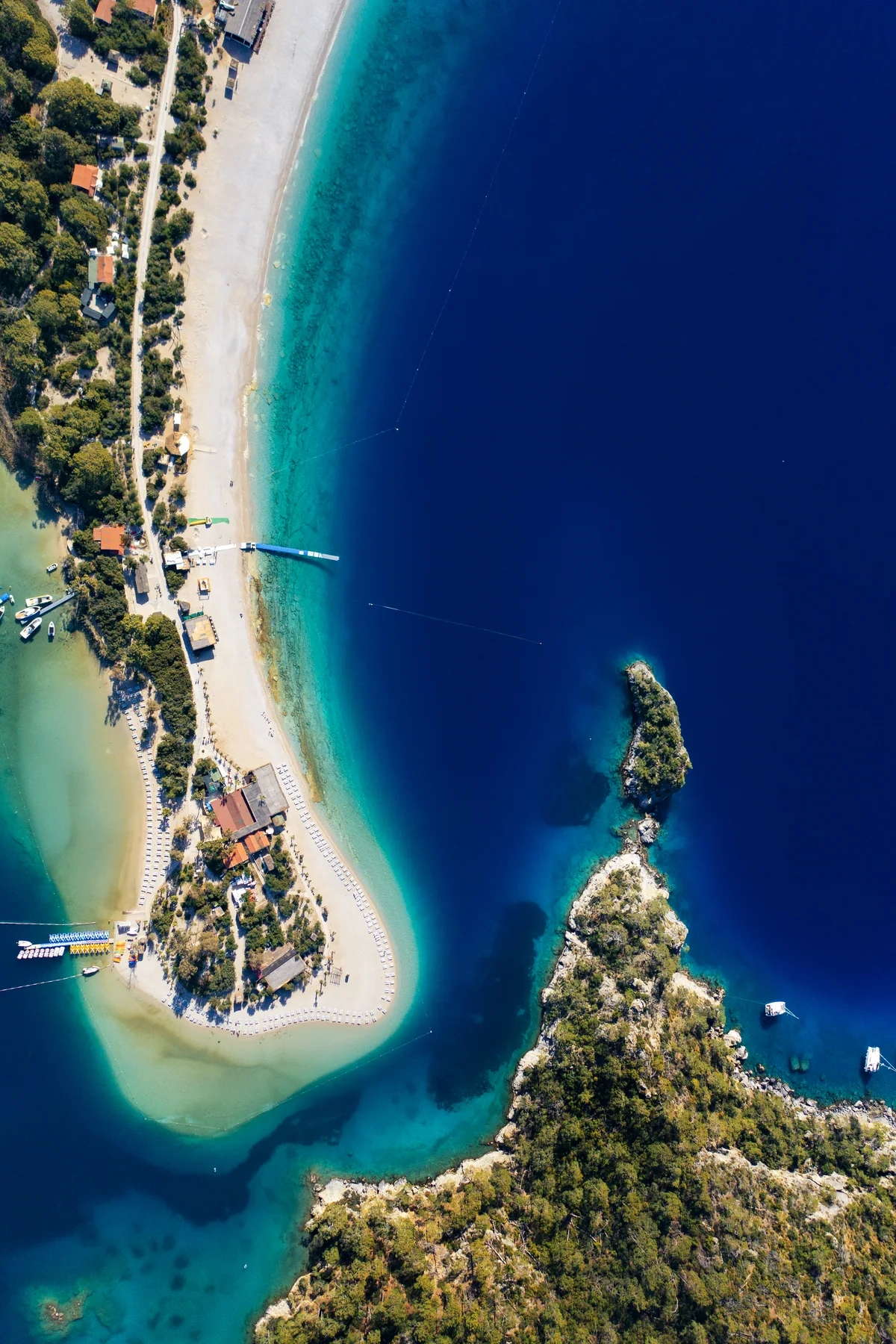
Near Fethiye, Ölüdeniz guards its Blue Lagoon, a still turquoise pool behind a curl of white beach, protected as a nature reserve and best arrived at slowly, by boat.
Below and Above
Beneath and Above the Water
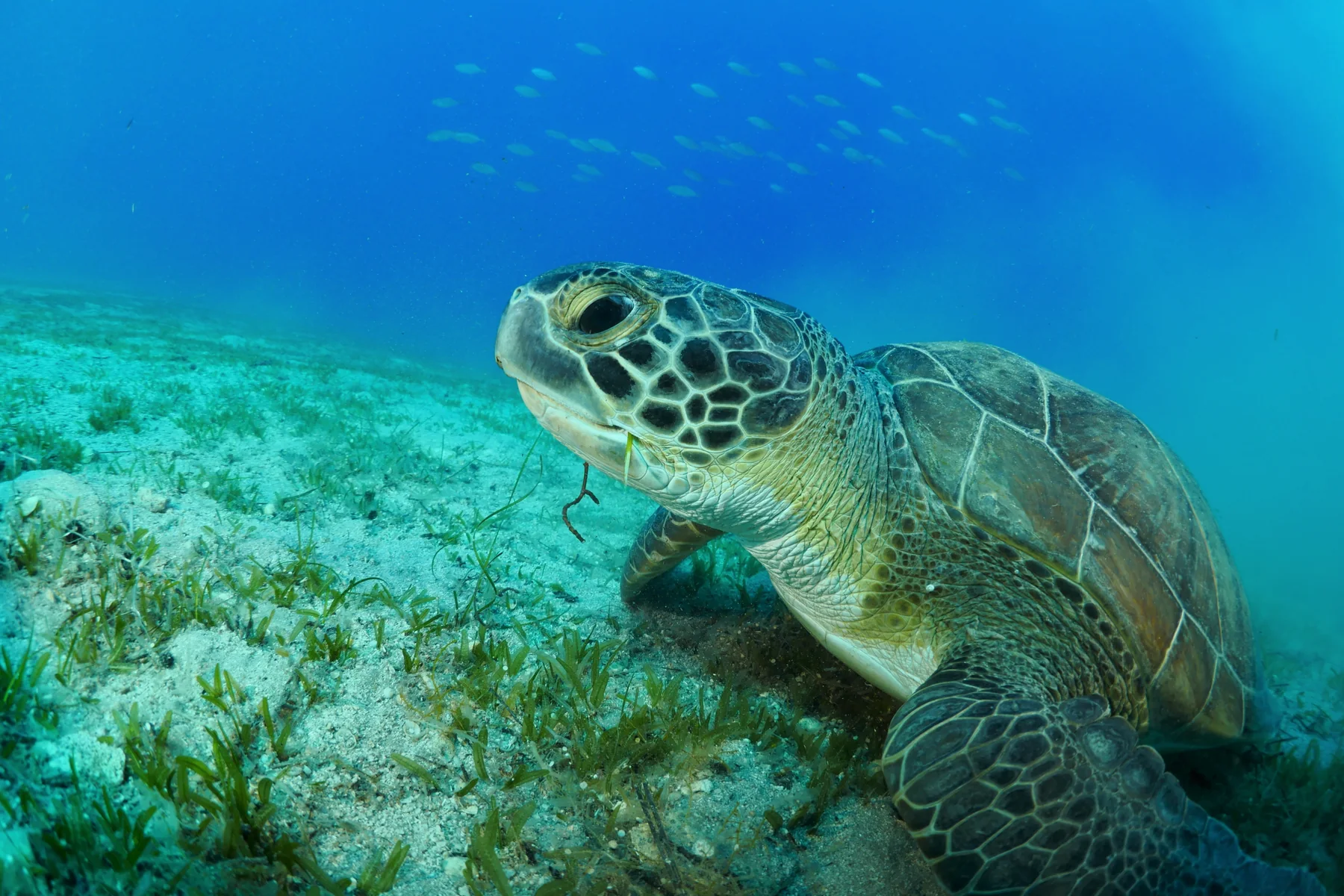
Part of the Blue Voyage happens below the surface. The waters off Fethiye and Kaş are among the clearest in the Mediterranean, and a mask and fins are enough to find loggerhead turtles gliding over the seagrass, unbothered by the swimmer above. Above the water, from the ridge of Babadağ, paragliders drift down over the coast in slow spirals. On this shore the past sits in plain sight too, never kept behind glass, simply part of the view.
Kaş & Kekova
The Lycian Finish
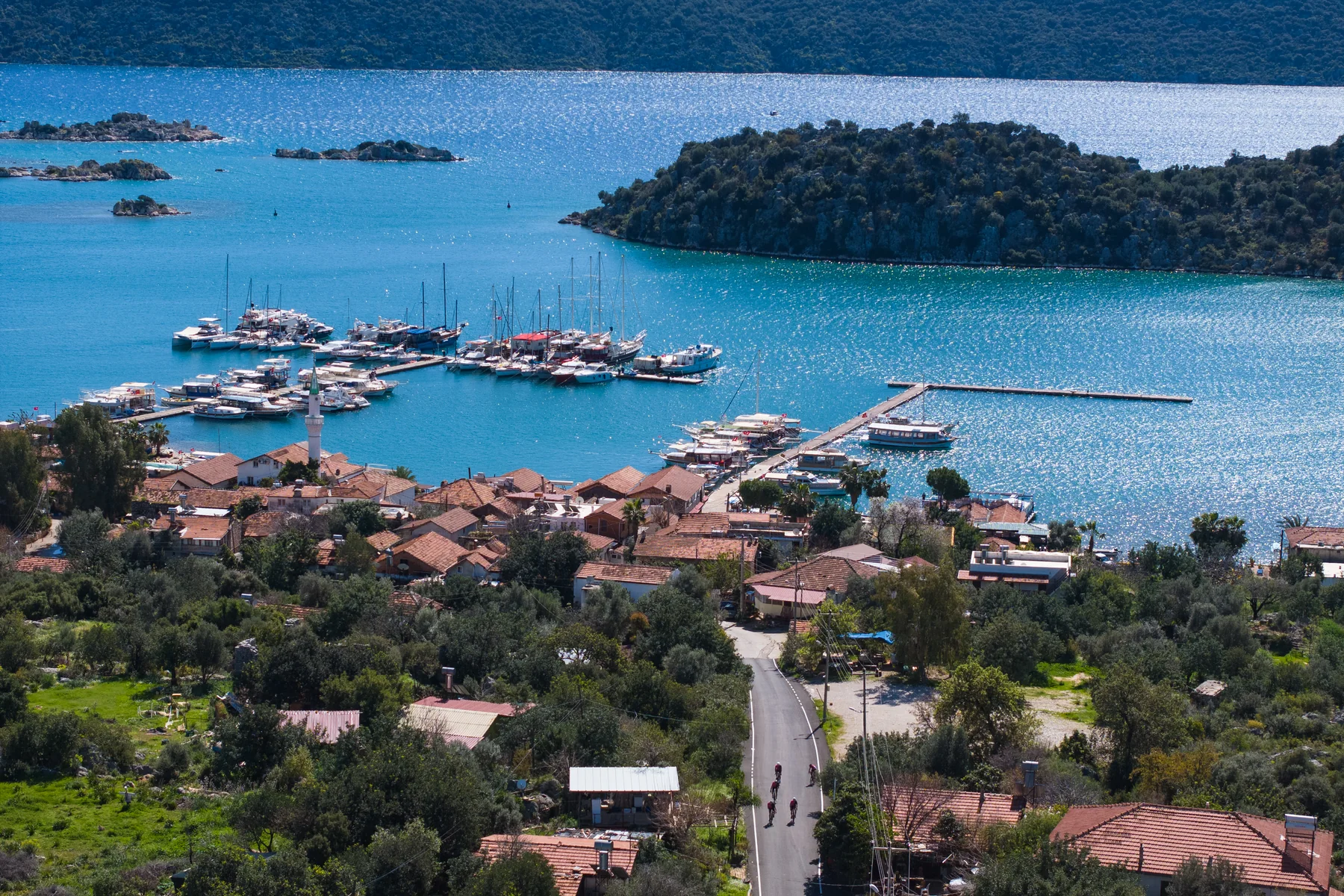
The journey often ends around Kaş and Kekova, where a Lycian town lies half-submerged just off the shore, its staircases and doorways still visible through clear water. The same civilization left rock-cut tombs all along this coast, and here the sea has the last word, as it has all along.
Kaş & Kekova
The Sunken City
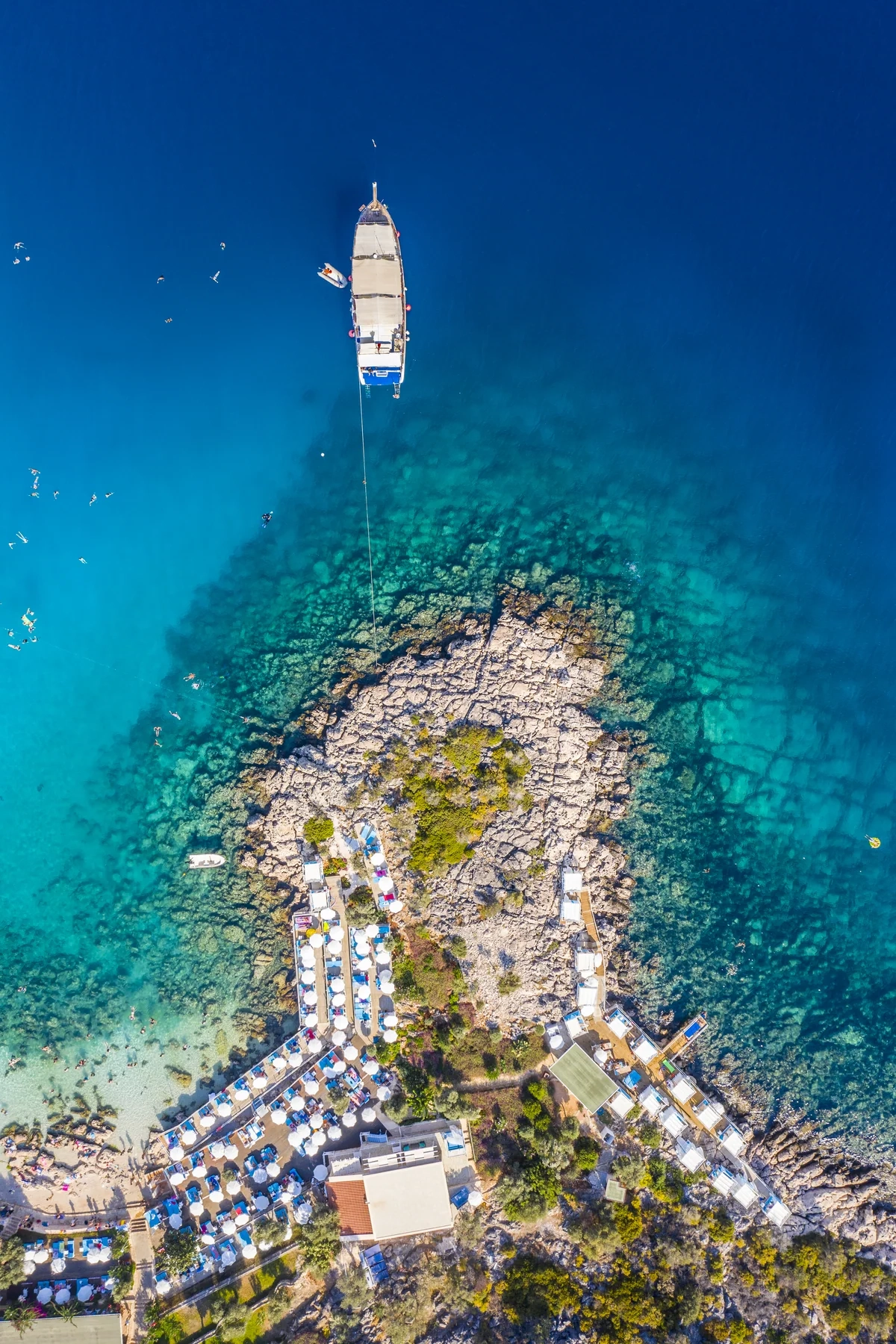
At Kaş, a gulet swings at anchor above a submerged Lycian shore, the old stones shifting green beneath the hull. It is the coast’s quietest, most atmospheric finale.
For Boujeez
The Blue Voyage is a lesson in a particular kind of luxury, the sort measured in space and time rather than thread count. It asks little of you beyond your attention, and it gives back a coast most people only ever see from the shore. For a region that understands the value of privacy and the pull of the sea, Türkiye’s slow sail reads less as a holiday than as a change of pace worth keeping.
Imagery courtesy of Go Türkiye.