


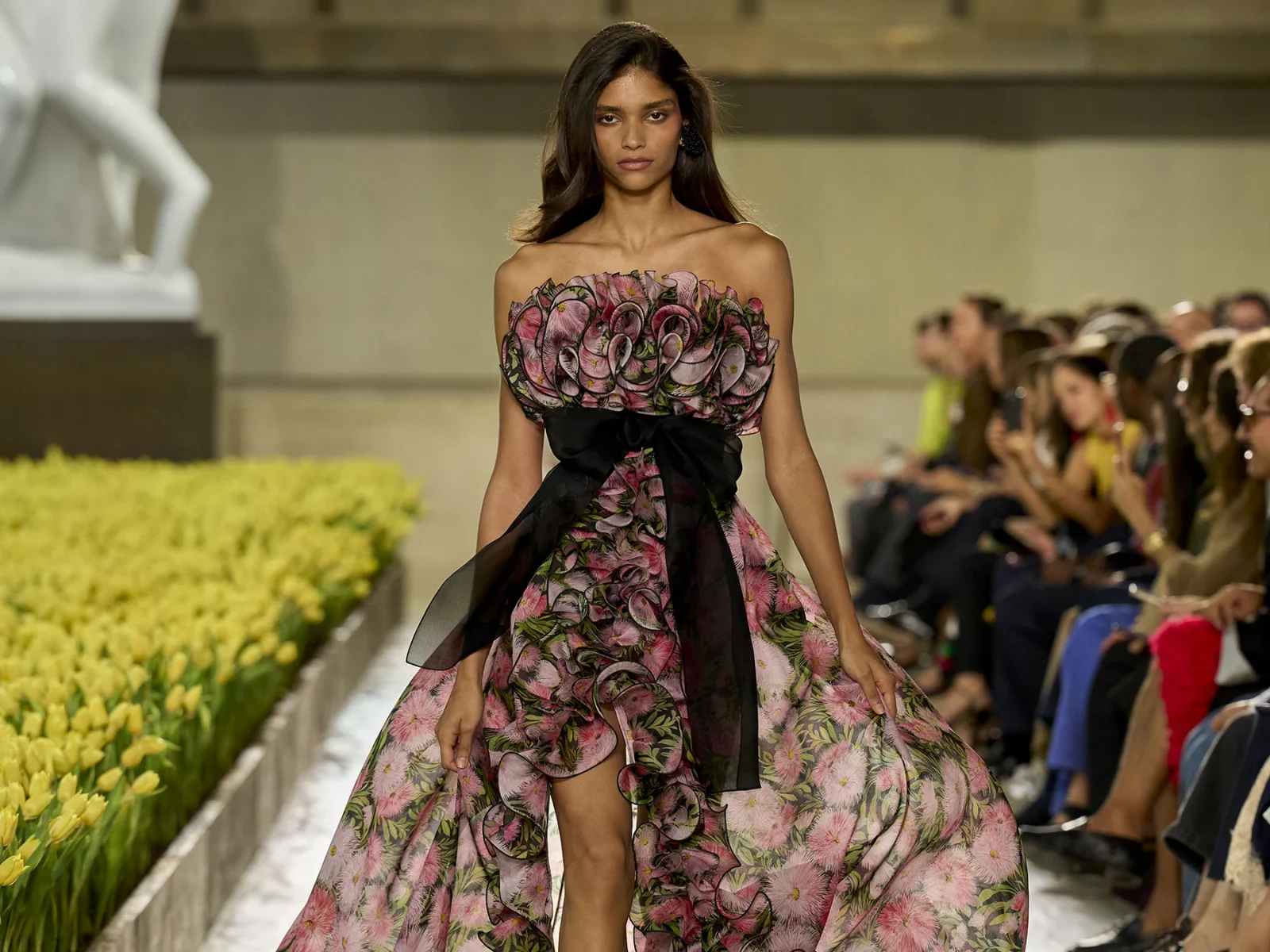
New York Fashion Week
Forty-Five Years, Staged at Lincoln Center
Carolina Herrera showed its Spring 2027 collection at Lincoln Center, where Wes Gordon marked the house’s forty-five years in New York with a wardrobe that read the city as an art form. Andy Warhol, a 1981 New Yorker cover and taxi-cab yellow ran through it, cut with the tailoring and polka dots the label has made its own.
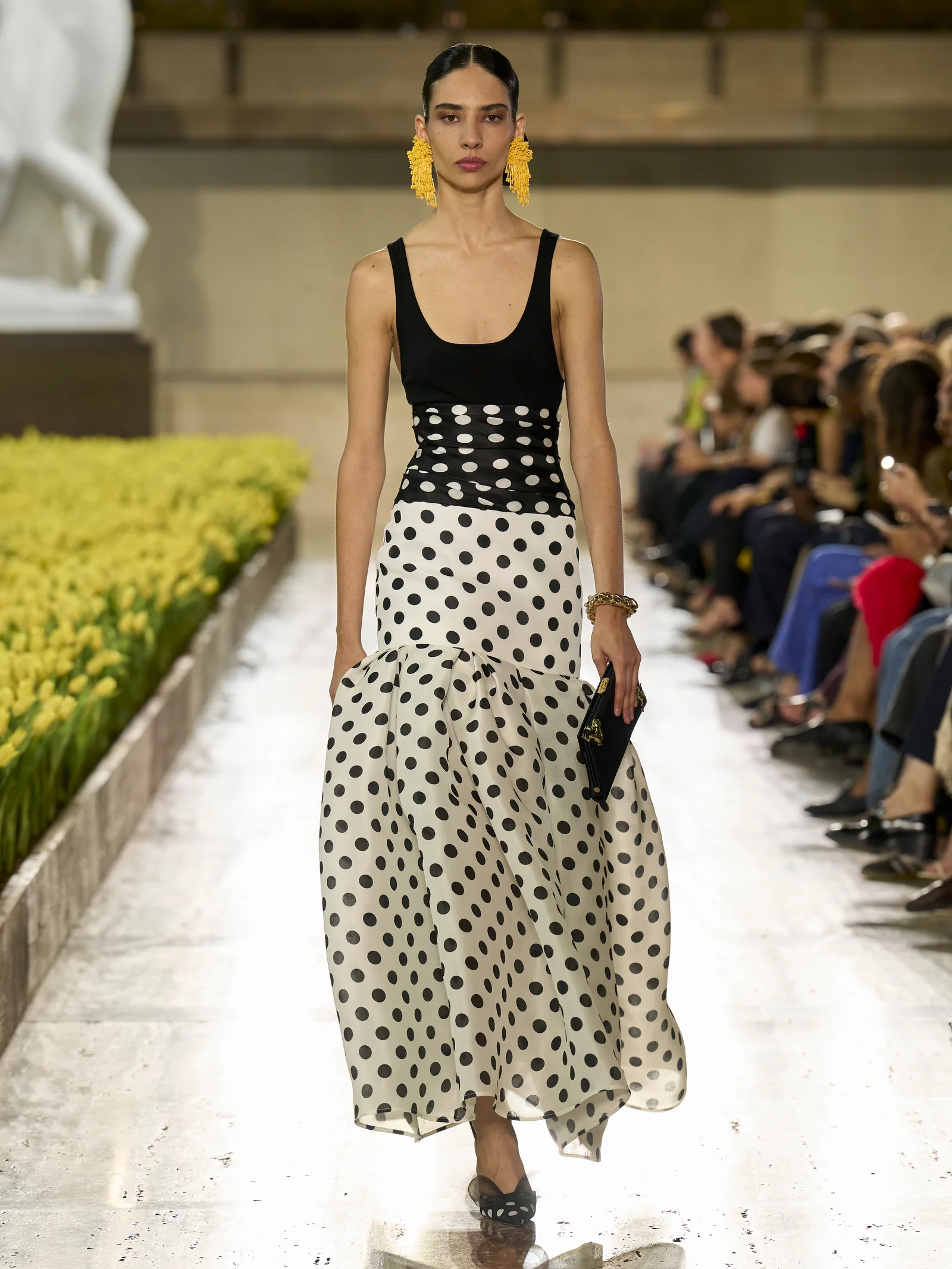
The Opening Look
A Dot to Set the Tone
The first exit read the season in shorthand: a black silk racerback tank over a drop-waist skirt scattered with ivory dots. The polka dot, a house signature, returned as the collection’s connective thread.
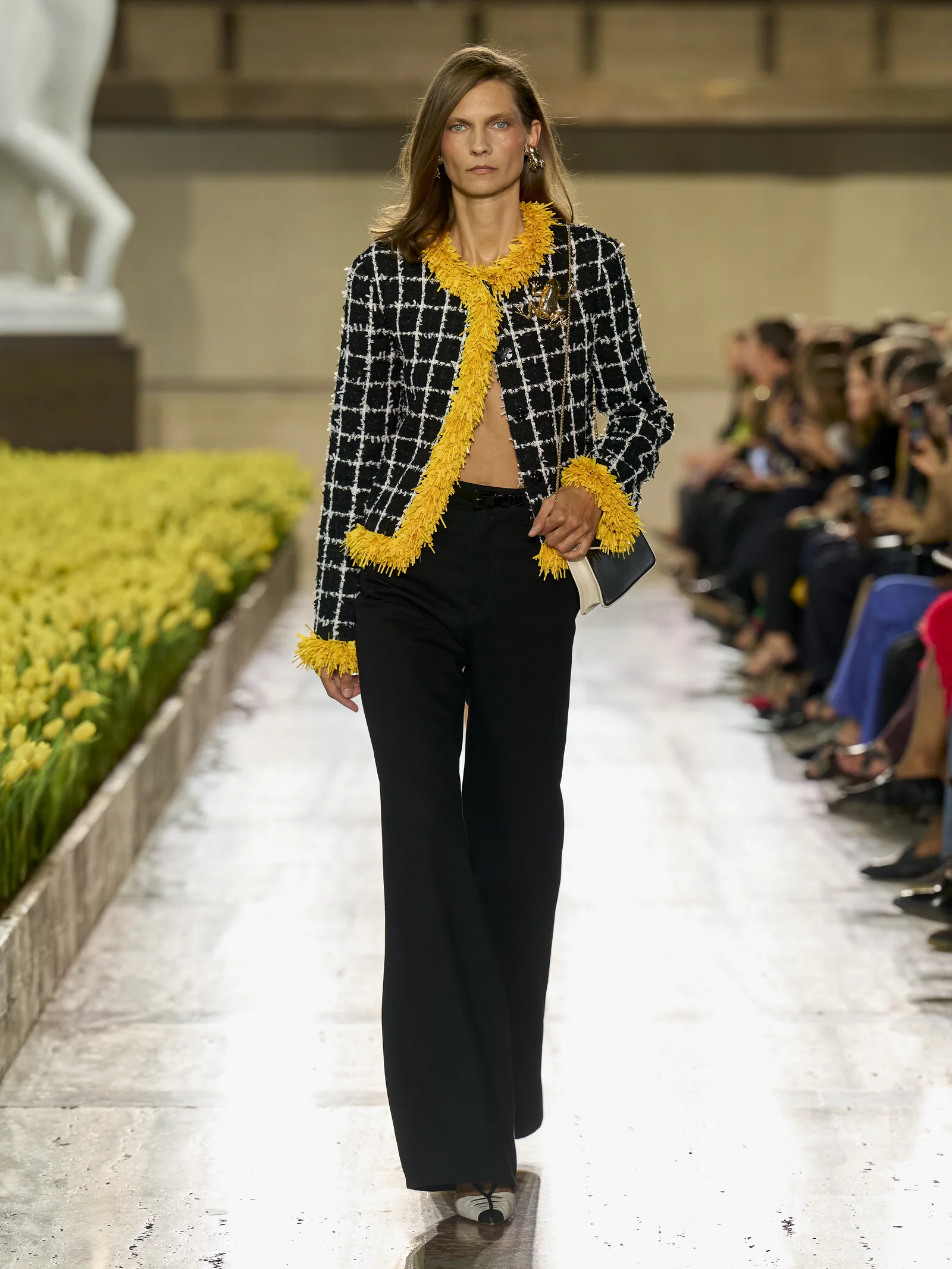
Tailoring
Tweed, Cut With a Yellow Charge
Windowpane tweed arrived trimmed in taxi-cab yellow and paired with a wide-leg black jean. It set the collection’s register early: precise tailoring loosened by a jolt of New York colour.
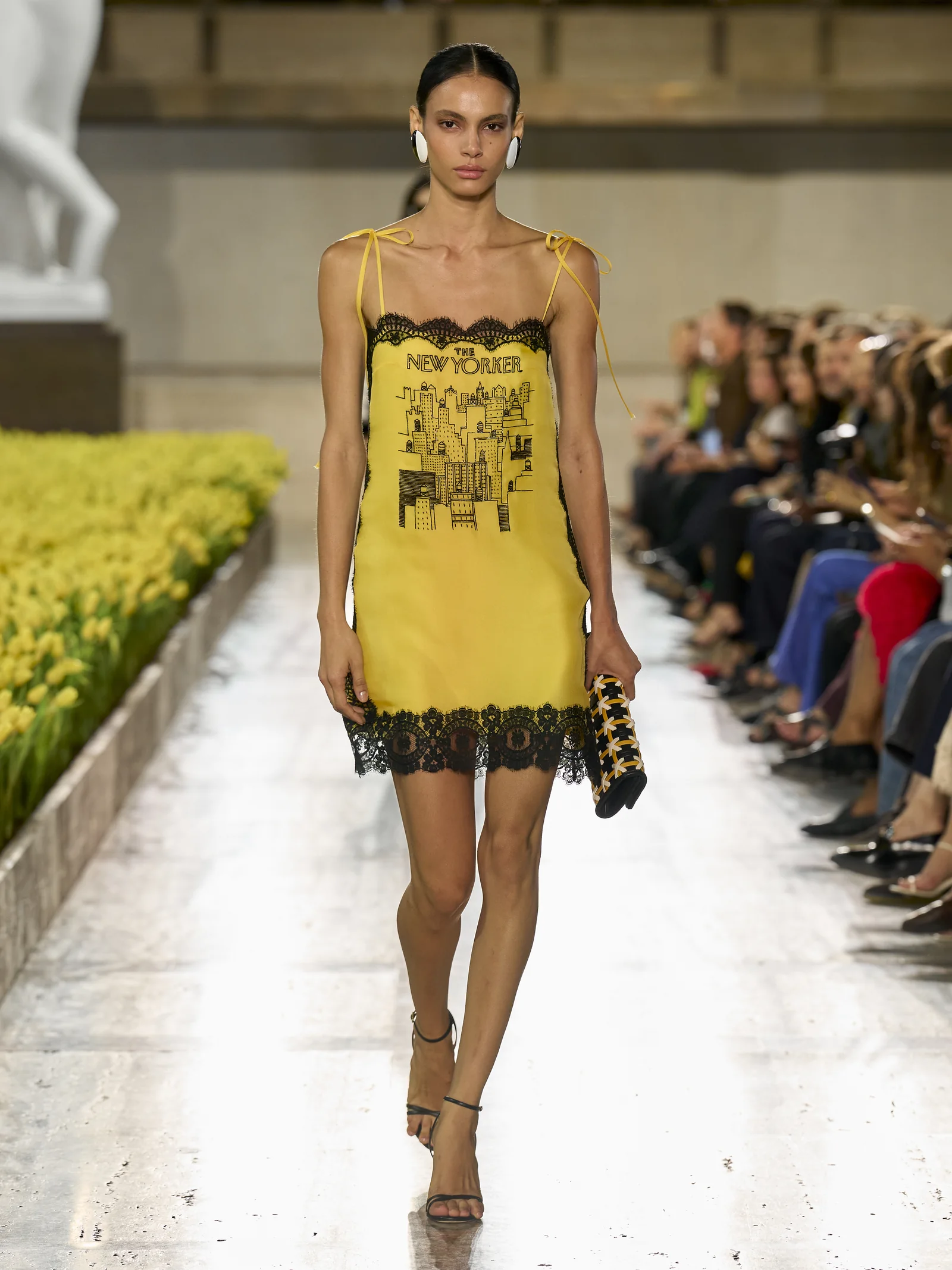
The Art References
The New Yorker, Embroidered
A taxi-cab yellow mini carried an embroidered recreation of a 1981 New Yorker cover, lace framing the artwork. It was the collection at its most literal about the city that raised the house.
Pop Art on the Runway
The City, Read as an Art Form
Two references anchored the collection. The first was Andy Warhol, whose portrait of Carolina Herrera was embroidered onto a tailored mini dress and a structured bag, pop art translated into thread and bead. The second was that 1981 New Yorker cover, stitched across silk in the season’s brightest yellow.
Around them, Wes Gordon built a New York vocabulary: the yellow of a taxi, the graphic snap of black and white, tailoring with somewhere to be. A Taffin fine jewellery capsule, all bold stones and gold, punctuated the looks without competing with them.
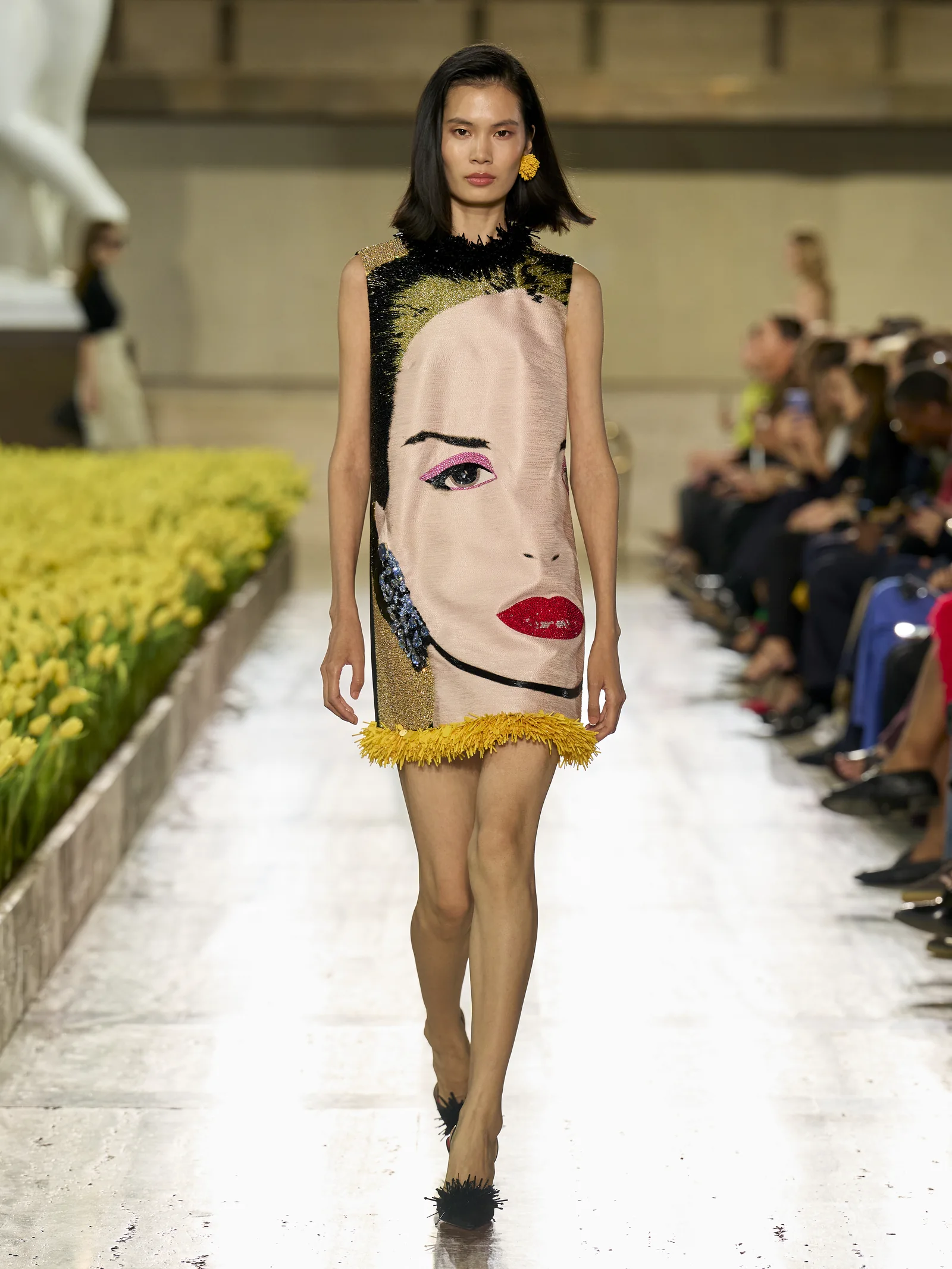
The Warhol Dress
A Portrait, Worn
The reference took its clearest form here, Warhol’s portrait of Carolina Herrera embroidered across a tailored mini dress, the artist’s silkscreen language rebuilt entirely in thread and bead.
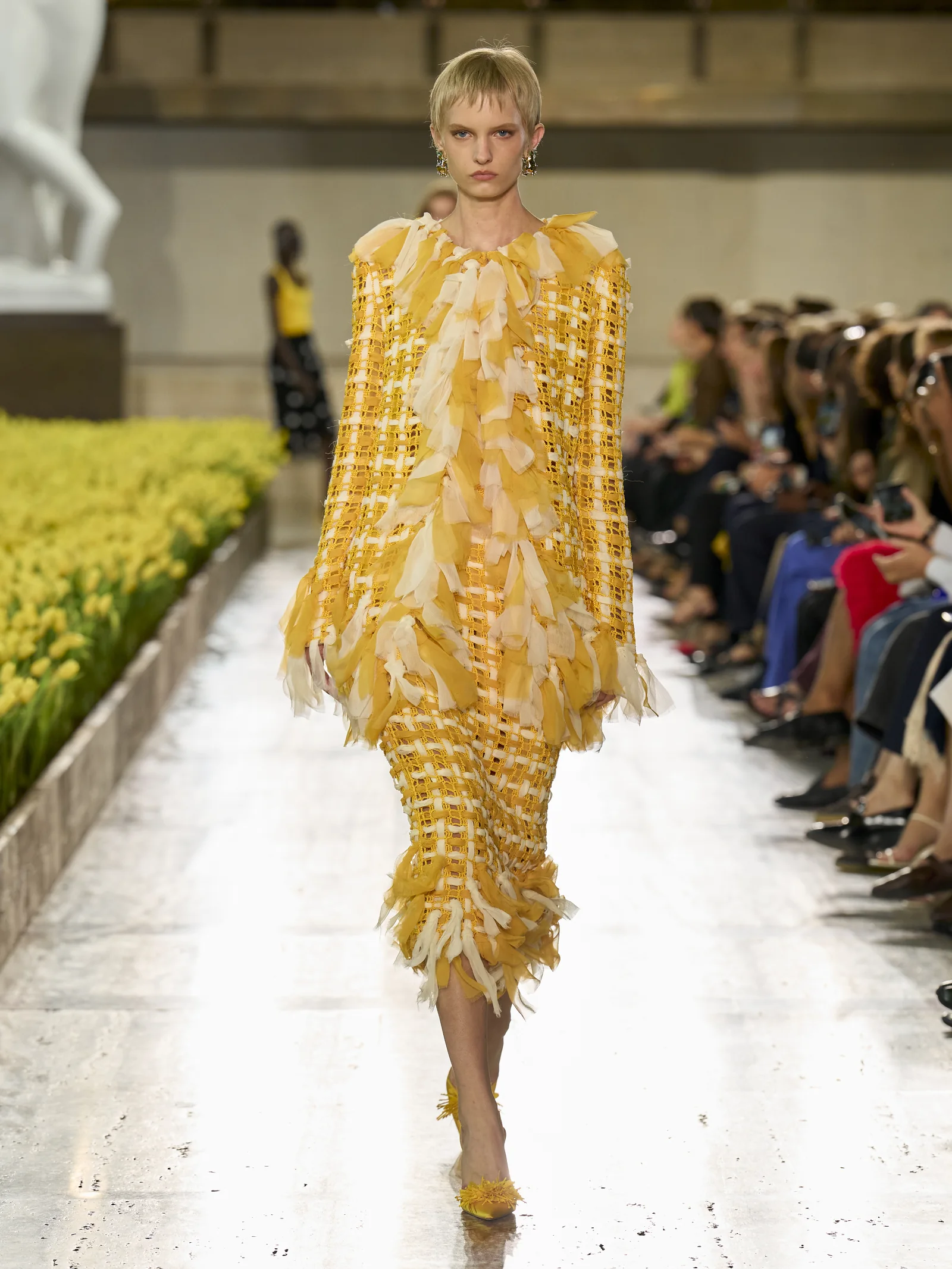
Texture
Yellow, Worked by Hand
A jacket and pencil skirt in taxi-cab yellow crochet knit showed the colour at full volume, the open weave catching light like something half-finished on purpose.
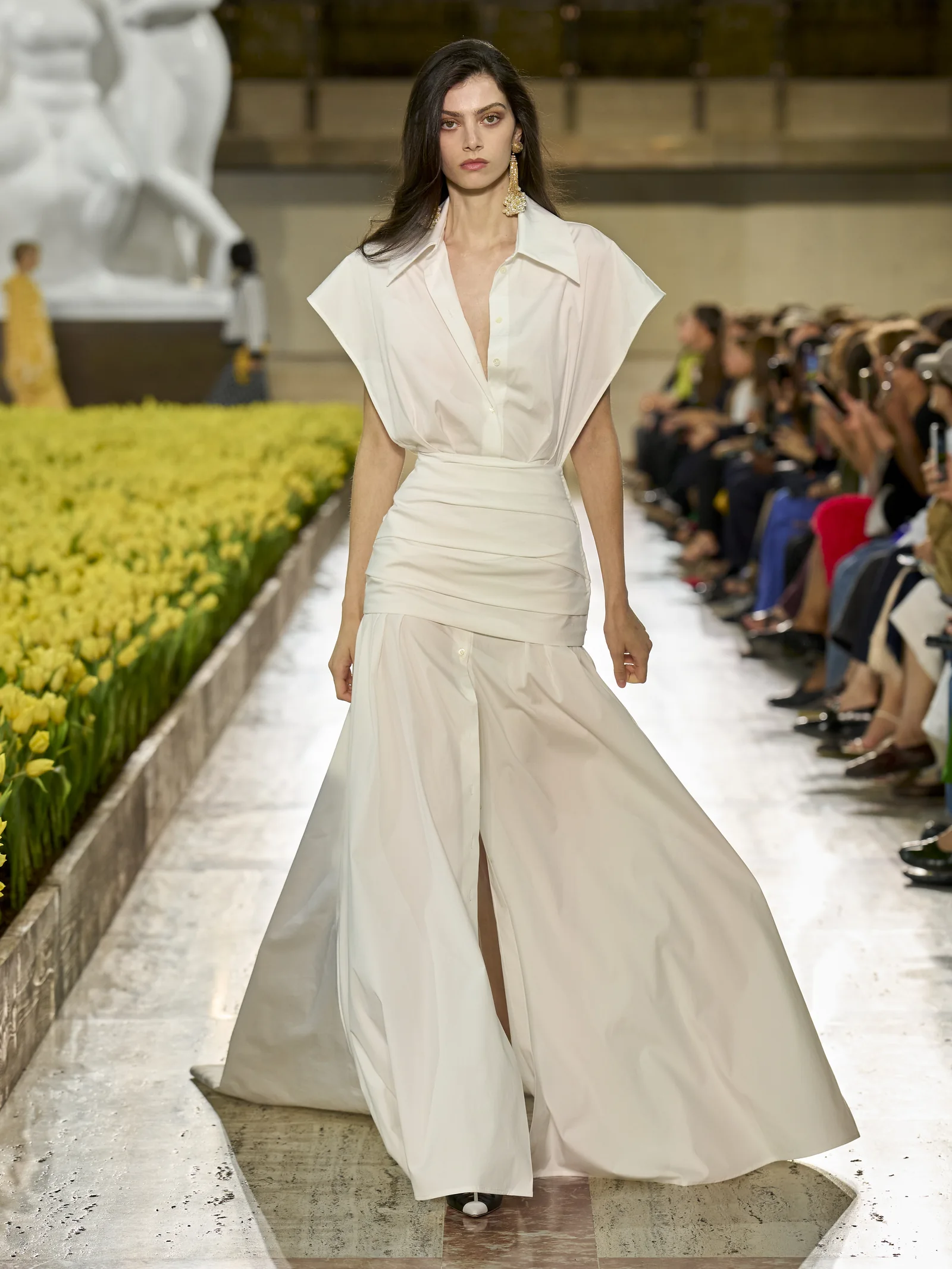
Drape
The Shirt, Rewritten as a Gown
A white cotton shirt dissolved into a draped, floor-sweeping gown, the collection’s argument that daywear and eveningwear sit closer than they look.
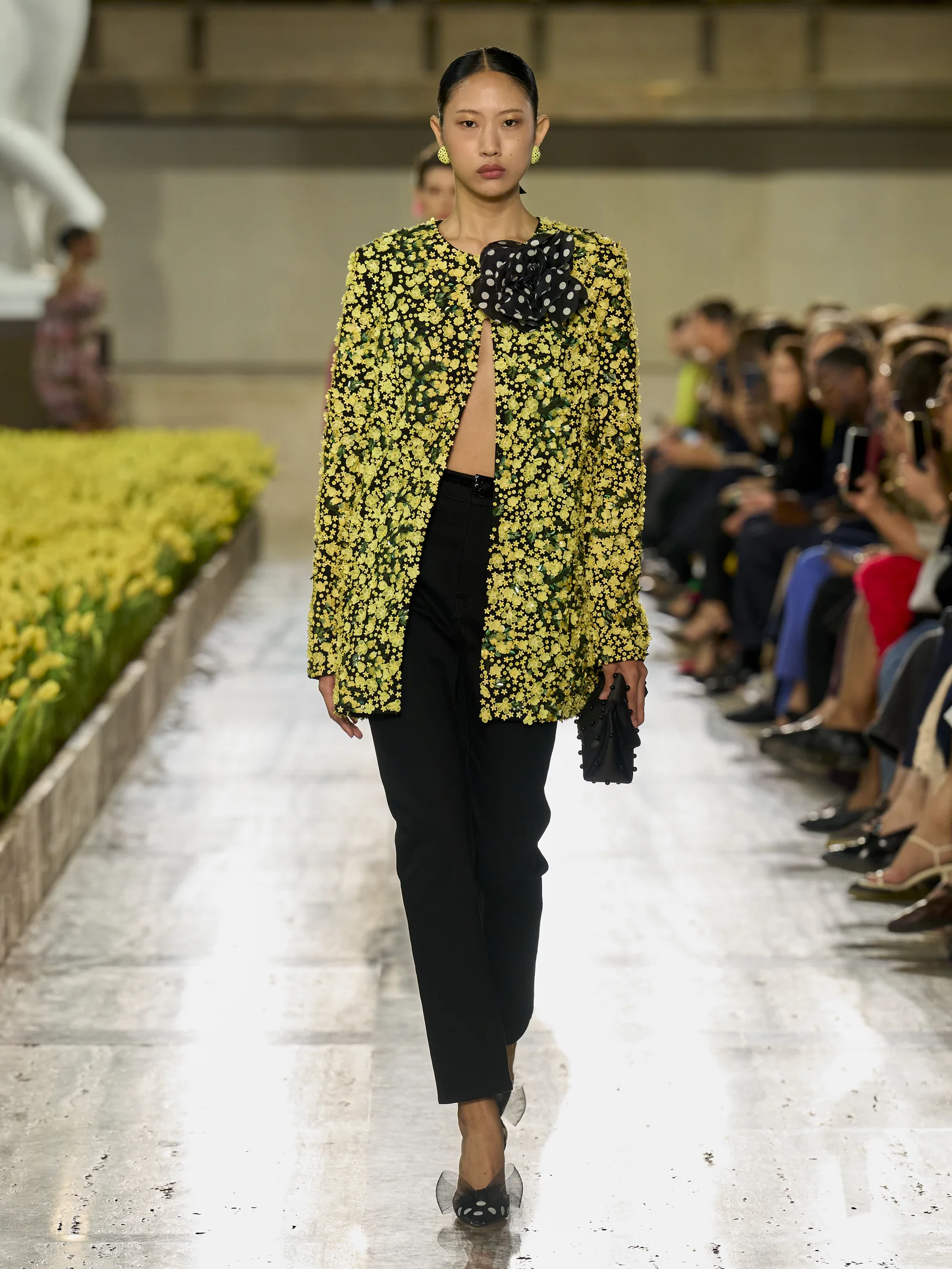
Separates
Embroidery, Cut Sharp
A jacket worked in yellow floral embroidery met a slim black cigarette trouser, proof that the season’s prettiness could be handled with a hard, modern edge.
The Colour Story
Colour, Walked in Sequence
The collection moved through colour in deliberate blocks. Black and ivory gave way to taxi-cab yellow, then sand, then a chili red that ran from tailoring to chiffon. Cucumber green and a soft cielo blue followed, each carried across knitwear, lace and organza.
It built like a well-planned room, one shade handed to the next, so the eye never tired and the through-line never broke.
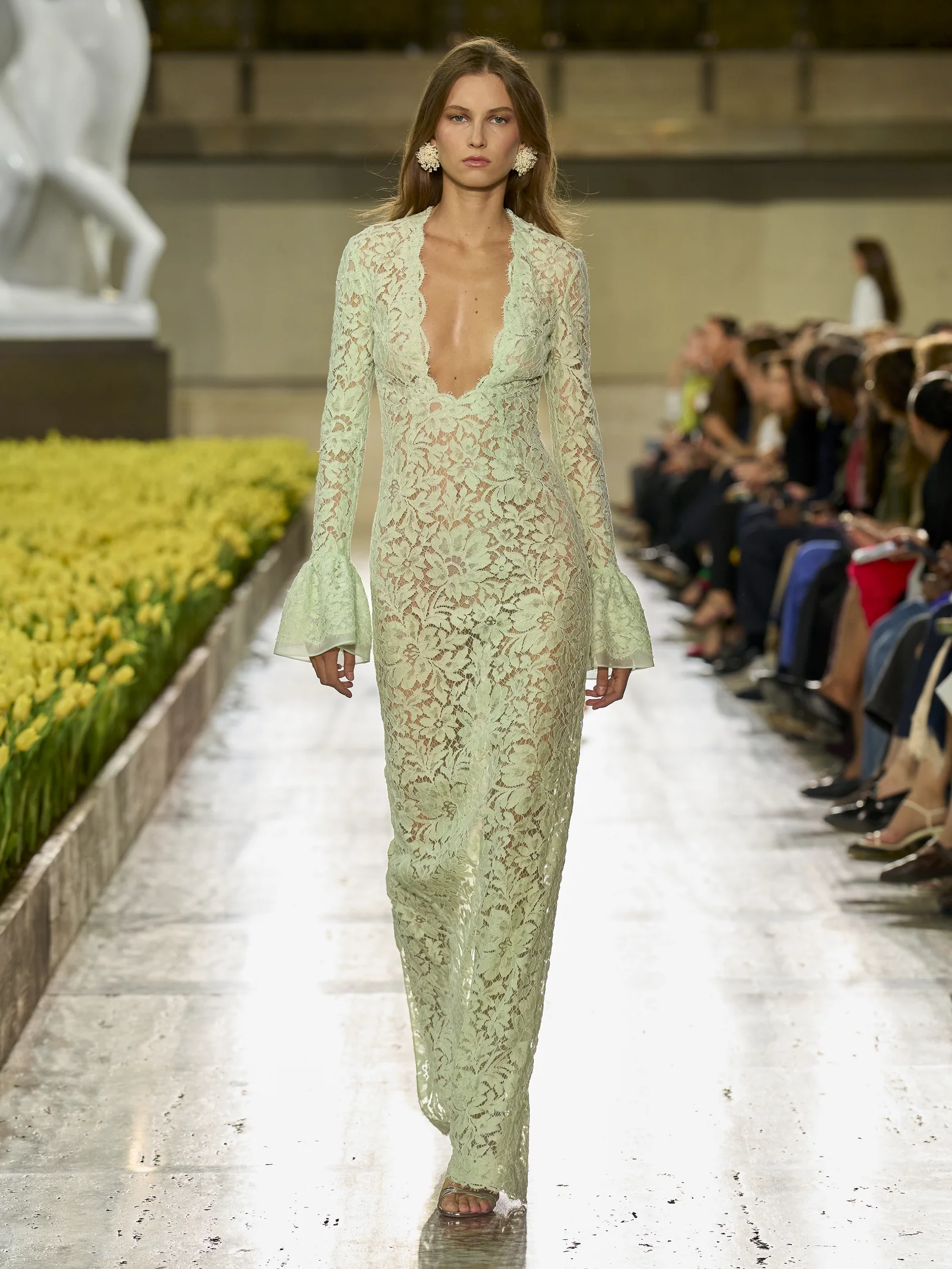
Green
Lace, in a Garden Shade
A plunging gown in cucumber corded floral lace brought the green chapter to its quietest, most romantic point, structure held entirely by the lace itself.
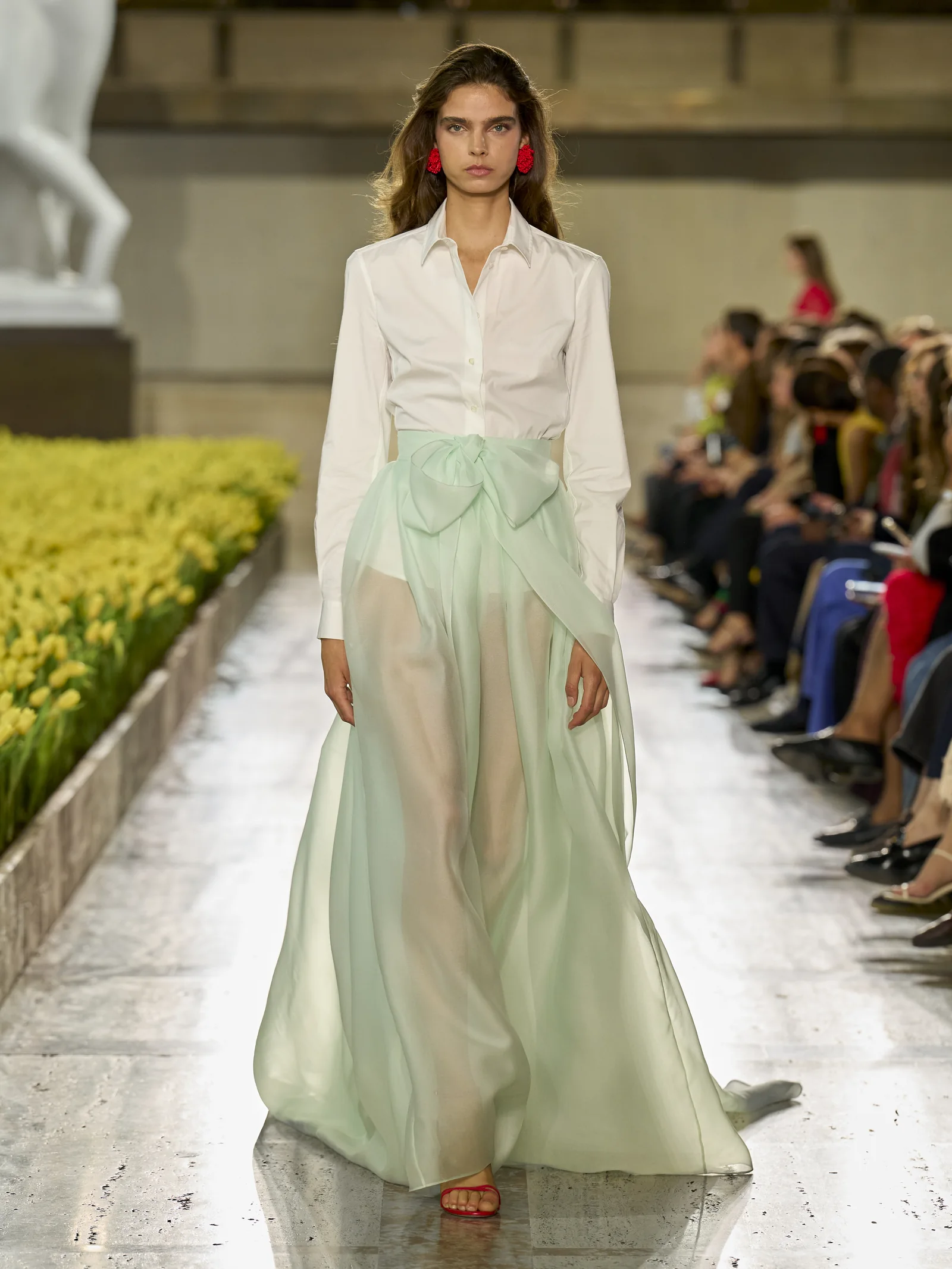
Proportion
A Shirt, a Ball Skirt
A crisp white shirt met a floor-length organza ball skirt in cucumber, the kind of high-low pairing that reads as ease rather than effort.
Eveningwear
Into the Evening
The final passage belonged to the gown. Silver floral lace, embroidered tulle and black silk gazar carried the collection into evening, ruffles and wire-worked hems giving each piece its own architecture.
The polka dot returned here too, blown up across a strapless ball gown, a reminder that a house motif can be playful and grand in the same breath.
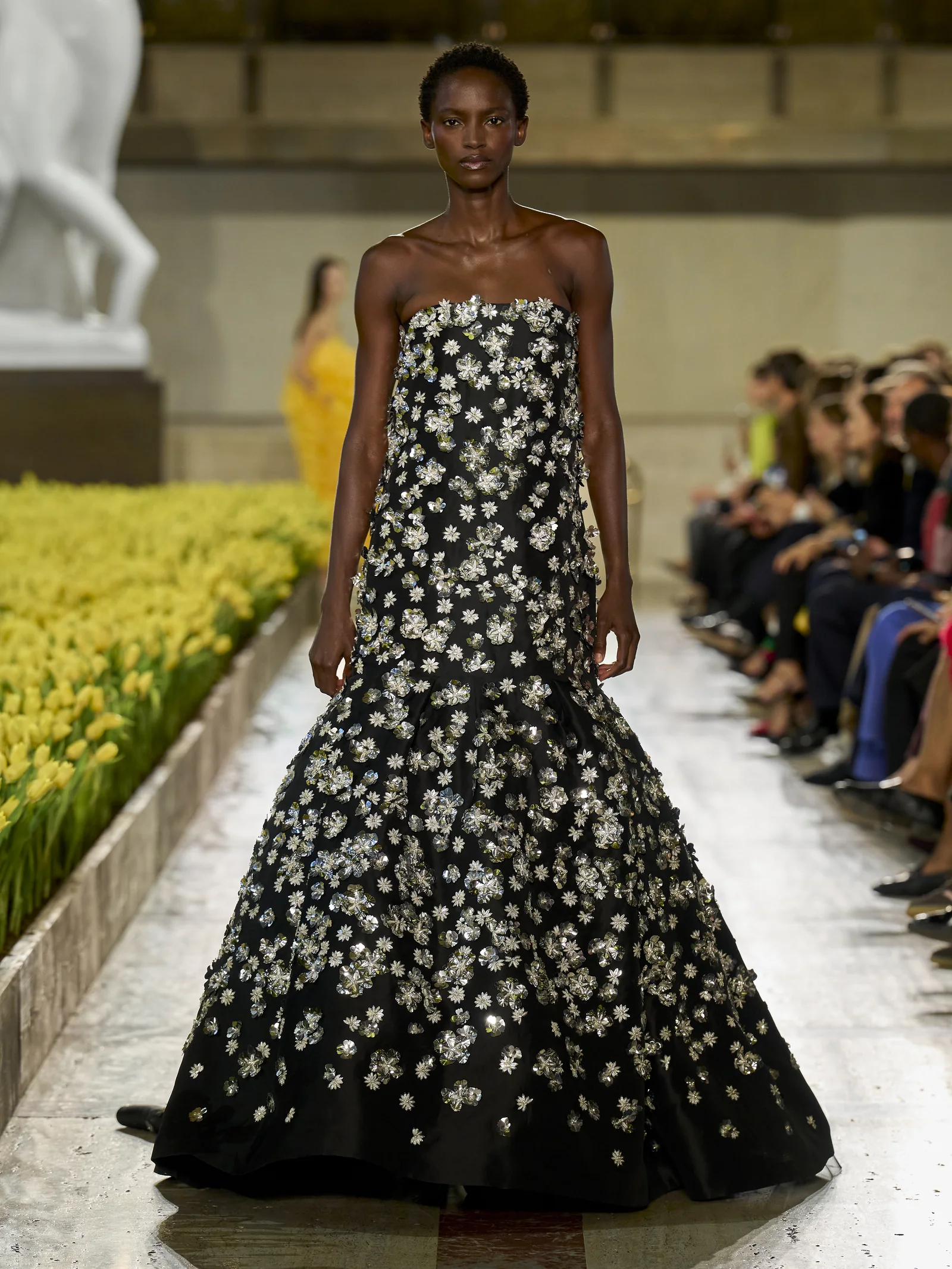
The Gown
Silver Flowers on Black
A strapless ball gown in black silk gazar, embroidered with silver flowers, was the collection’s evening statement, restraint and drama held in the same silhouette.
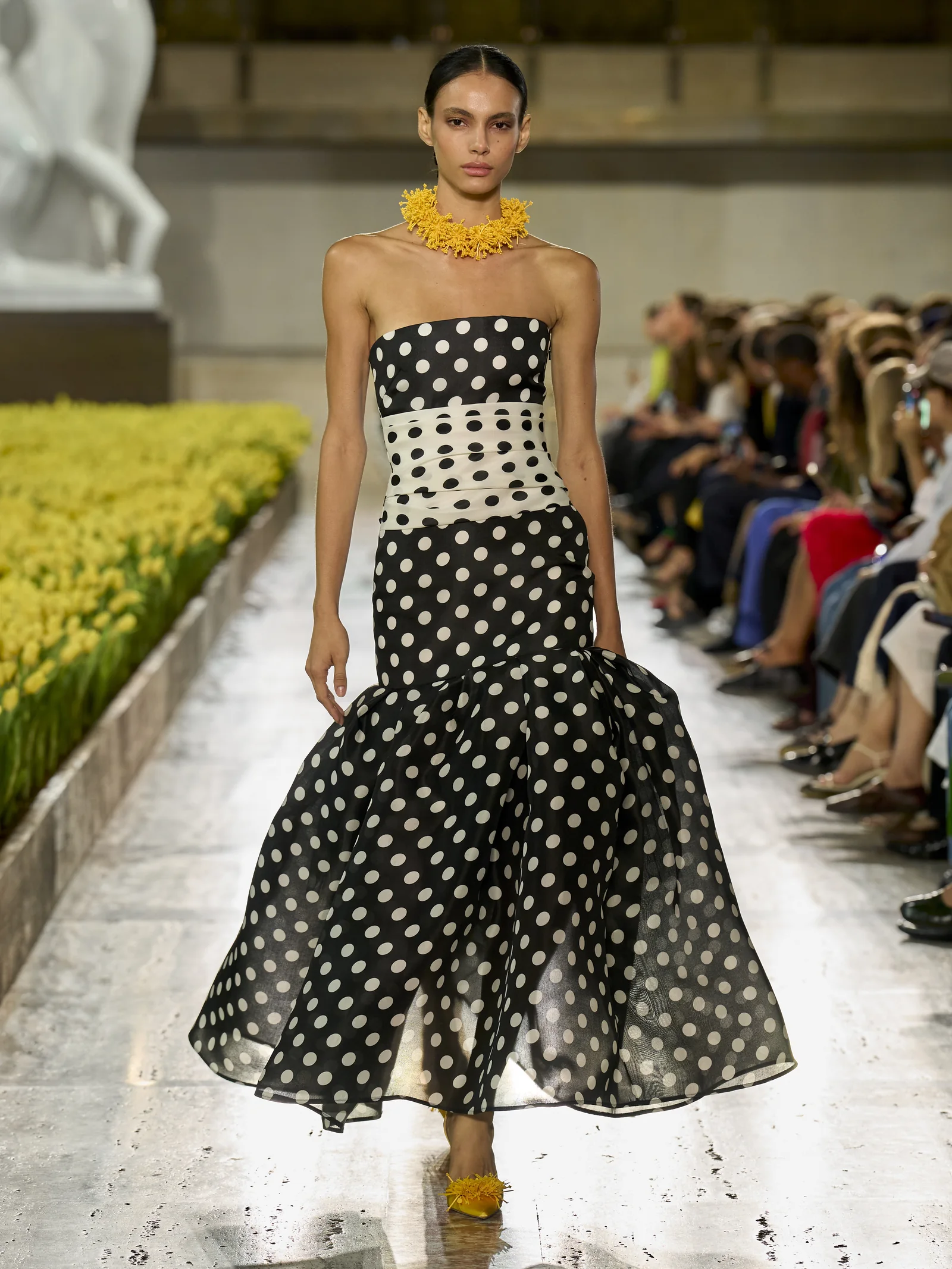
The Dot, at Scale
A Signature, Sized for the Ballroom
The dot closed as it opened, now a drop-waist gown in black and ivory dot gazar, the house’s most familiar mark given its most formal outing.
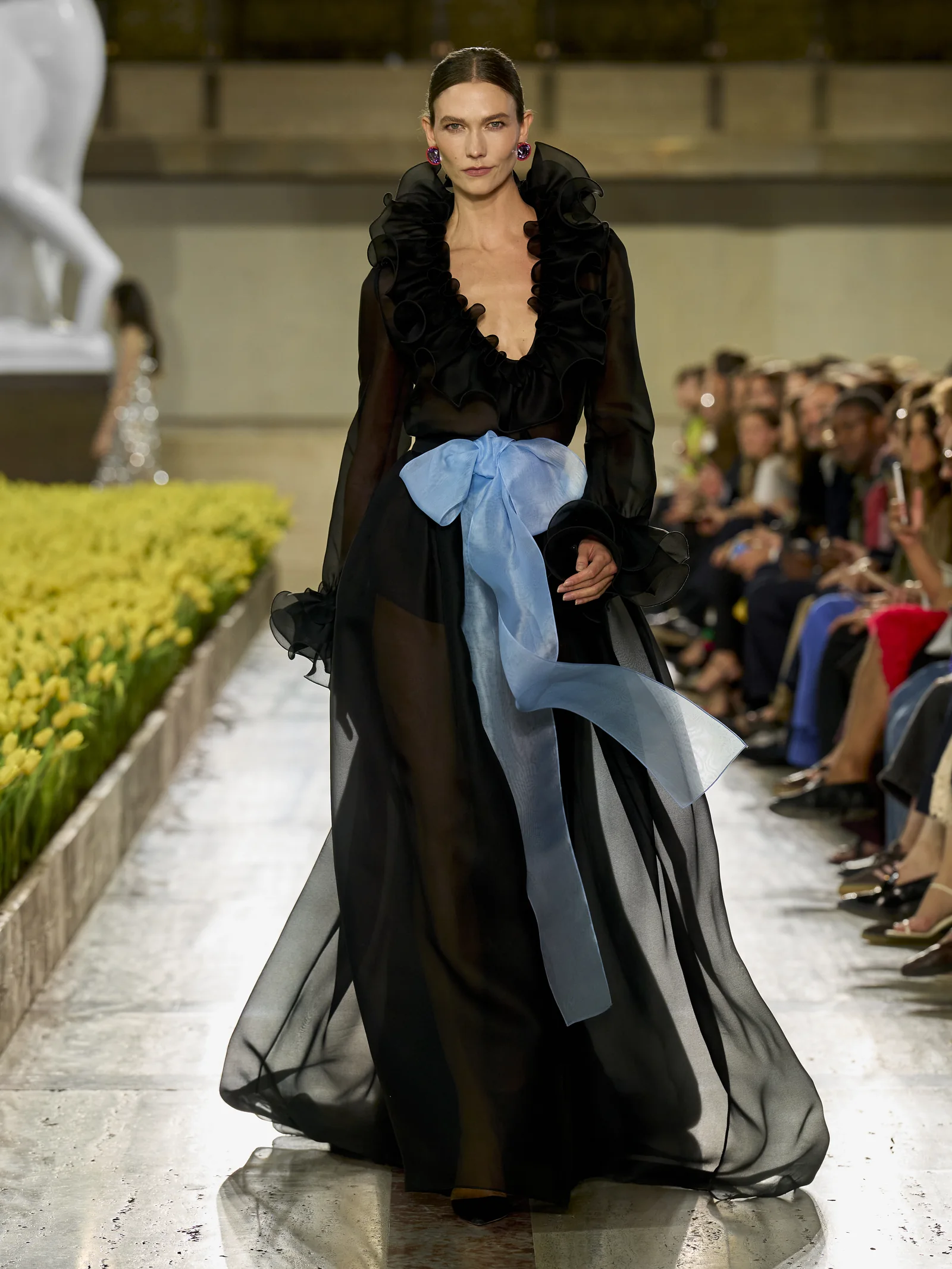
The Finale
Karlie Kloss closed the show in a black organza ball skirt, a ribbon of pale blue at the waist.
Carolina Herrera Spring 2027
For Boujeez
The strongest houses do not chase the new so much as translate what they already are. Carolina Herrera spent its Spring 2027 show turning the textures of New York, Warhol’s portrait, a taxi’s yellow, a 1981 cover, into cloth, and made the case that heritage is not a museum piece but a working language. For a luxury built to last, the archive is not the past. It is the raw material.