

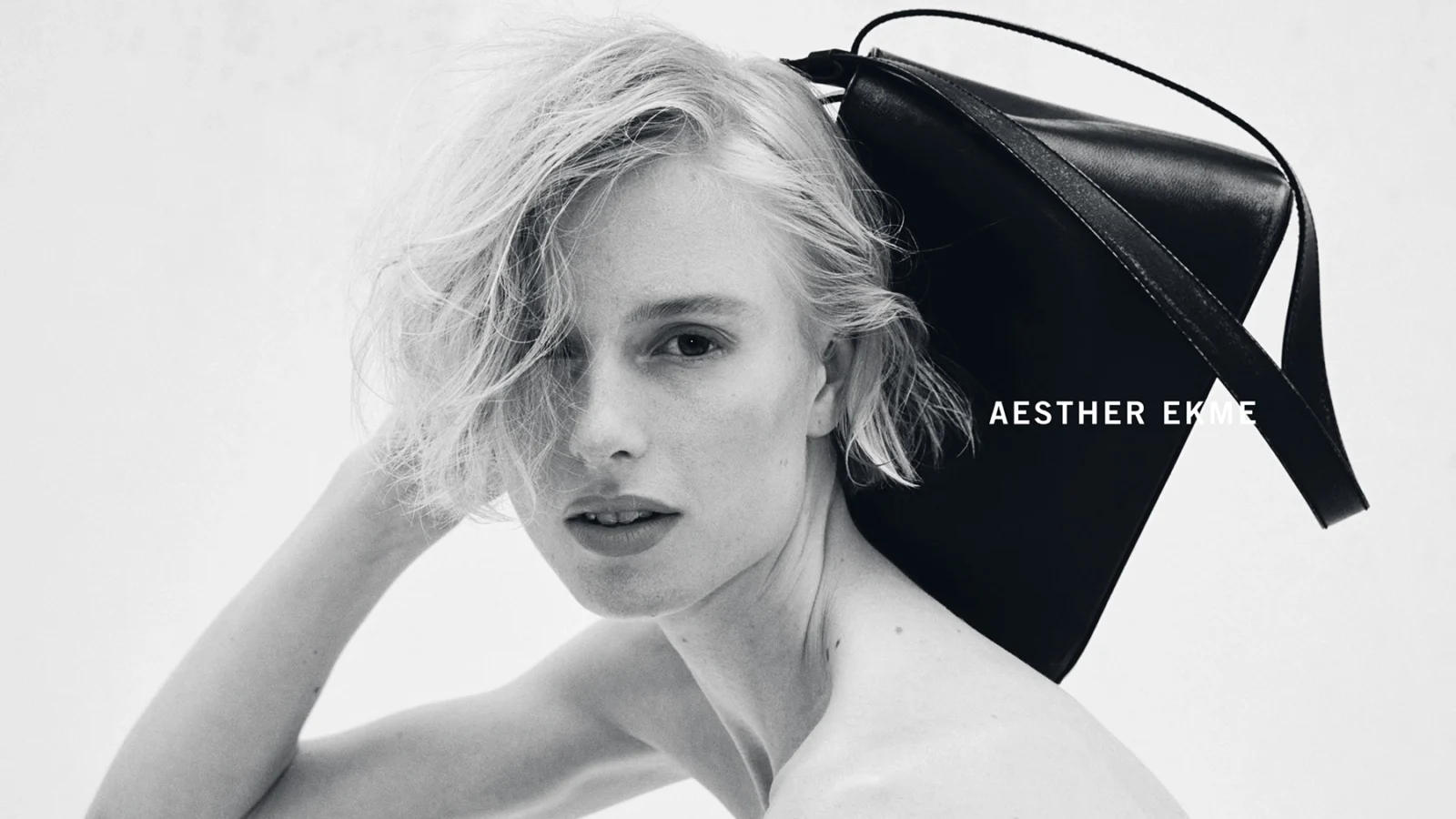
In a season where many accessories collections chase immediacy, Aesther Ekme turns inward. For Fall Winter 2026, the Paris-based leather goods label builds its latest chapter around introspection, duality, and the shifting architecture of identity, drawing conceptual inspiration from Ingmar Bergman’s 1966 film Persona.
It is a fitting reference for a brand that has long preferred restraint over spectacle. Rather than relying on decorative excess, Aesther Ekme continues to work through proportion, material, and silhouette, using the language of form to explore something more psychological. Here, the collection becomes a study in contradiction: hard and soft, intellect and sensuality, structure and release.
Accessories as Extensions of the Self
According to the collection text, this season’s pieces are designed to move beyond utility. Zips, straps, and closures are treated as points of tension, tracing an intimate relationship with the body and marking the subtle friction between external form and inner expansion. It is a thoughtful proposition, and one that elevates the collection above the level of simple seasonal accessories.
That sensibility is what makes Aesther Ekme resonate in today’s luxury landscape. These bags do not try to overpower the wearer or dominate the outfit. Instead, they behave like quiet companions, allowing personal expression to remain central. The result is luxury with a lower volume but a sharper point of view.
A Sculptural Lineup for Fall Winter 2026
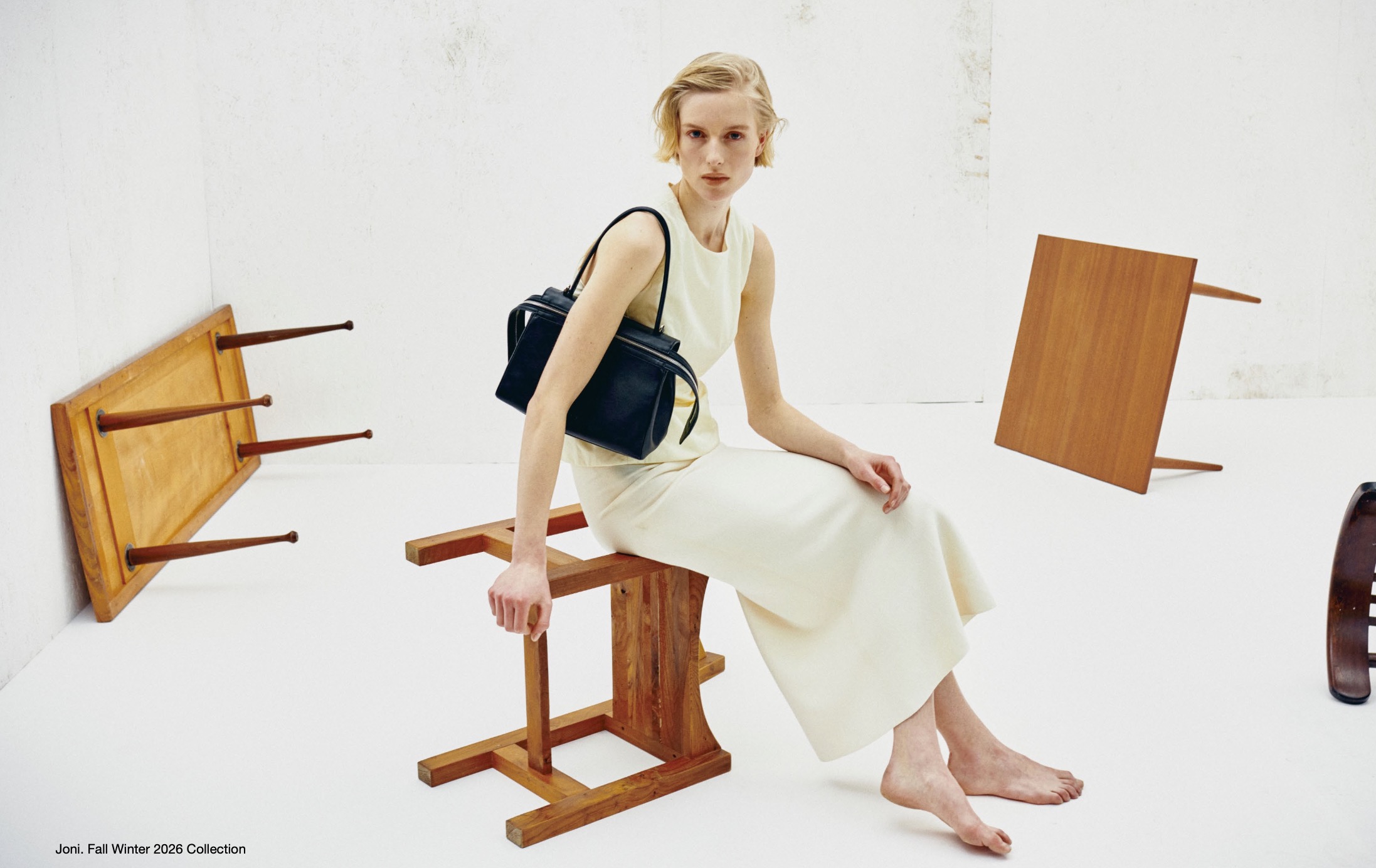
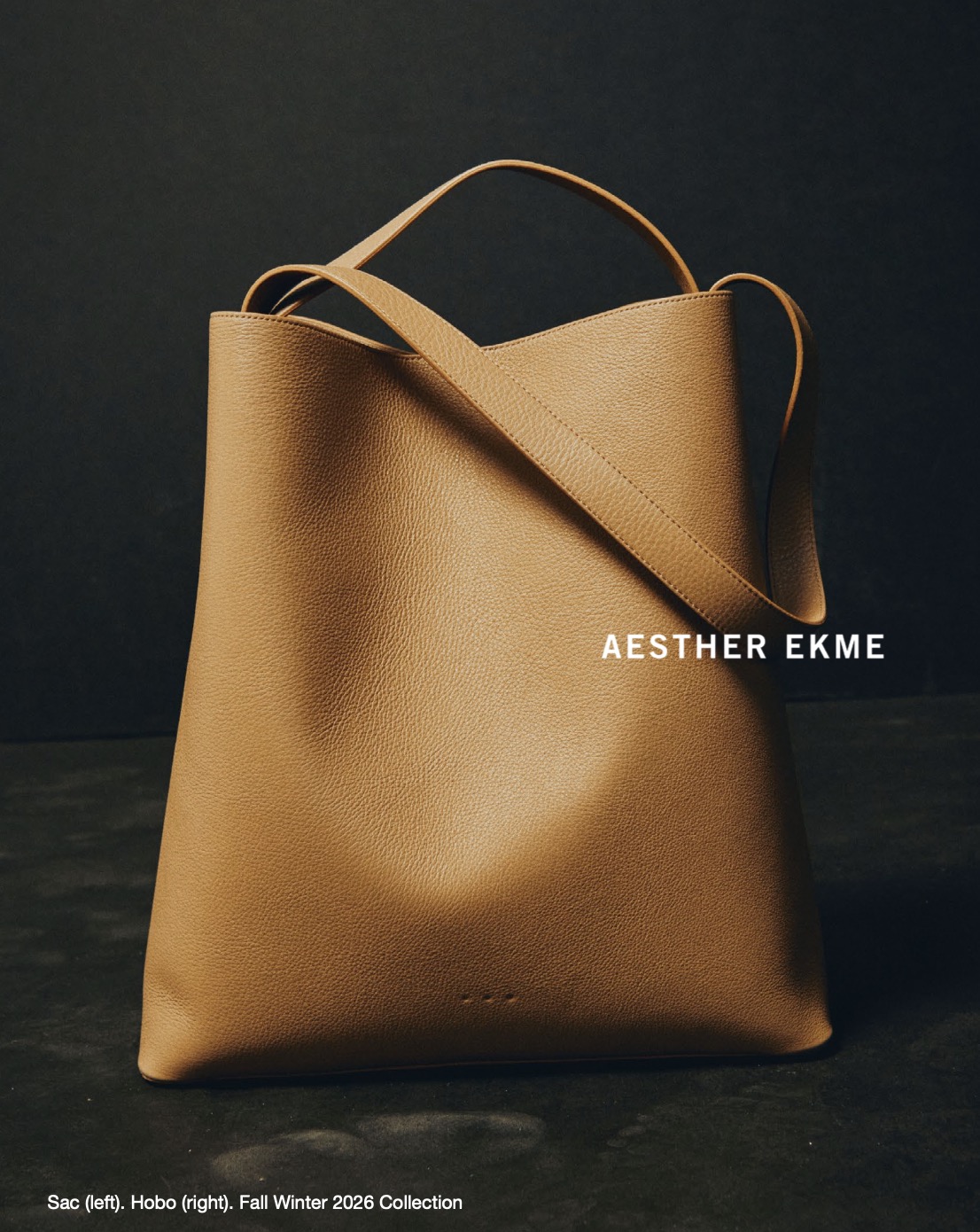
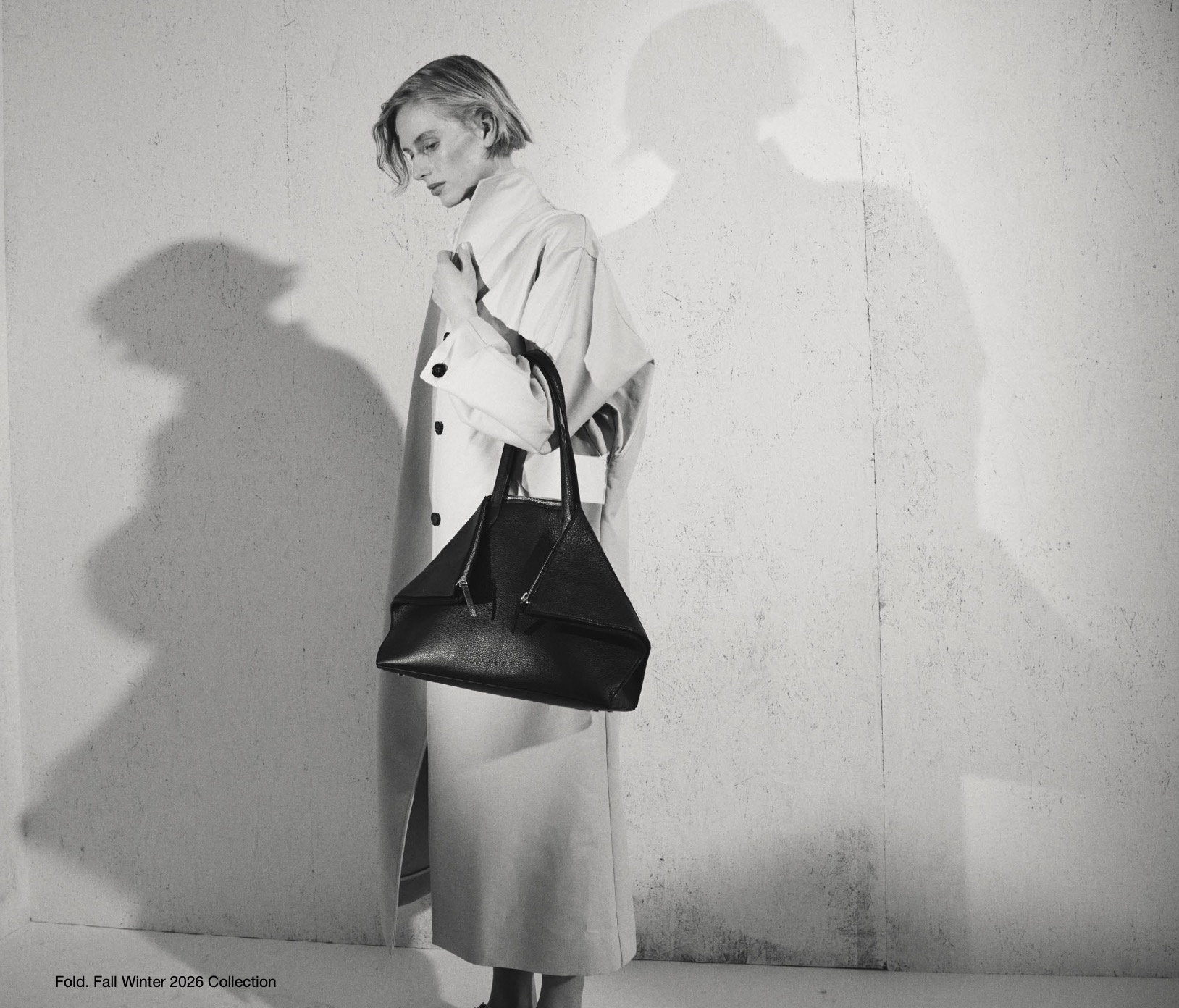
The lookbook introduces a series of refined silhouettes that continue the label’s sculptural design language while pushing it into a more introspective register. The Joni, shown early in the story, carries a compact architectural clarity that feels both polished and deeply wearable. Elsewhere, the Sac and Hobo explore softness through volume, while the Demi Lune line remains one of the collection’s most fluid and emotionally expressive forms.
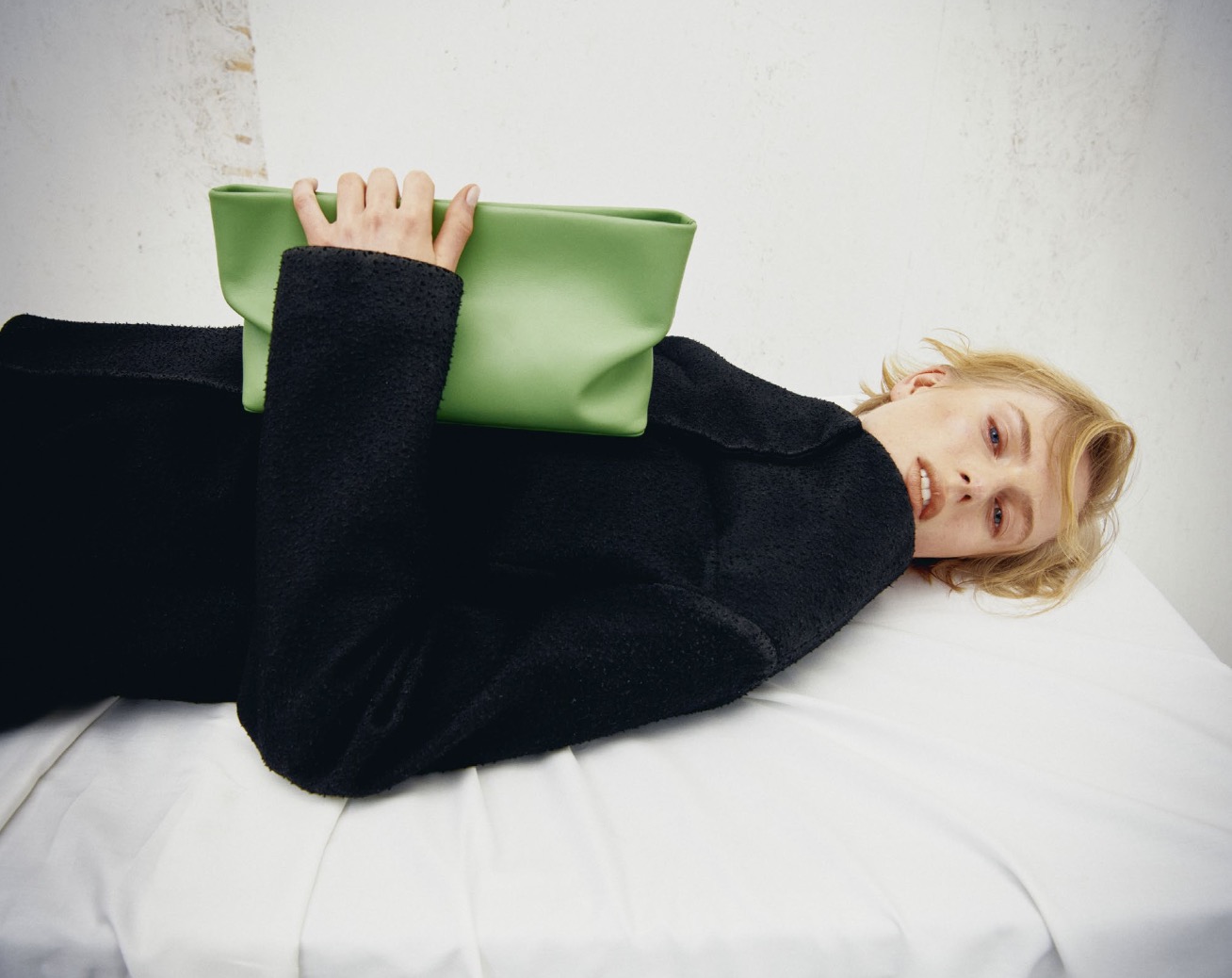
There is also a strong tactile tension running through the edit. The Nina Clutch appears in a striking acid green, bringing a sudden note of visual disruption to an otherwise controlled palette. The Mini Sac is rendered in a monochrome portrait format that sharpens its graphic appeal, while Cosmo Soft introduces a warmer, more rounded shape that gently offsets the stricter edges seen elsewhere.
Among the most compelling designs are the Fold, Demi Lune Cloud, and Market Tote, all of which reinforce the brand’s ability to make softness feel intentional rather than loose. Even when the forms relax, they never lose precision. That balance is where Aesther Ekme is at its strongest.
Quiet Luxury With an Inner Life
What makes this collection especially relevant now is that it understands quiet luxury as more than visual minimalism. The strongest pieces here are not only clean. They feel psychologically loaded. They suggest a wearer who does not need fashion to perform identity loudly because the design is already doing subtler work beneath the surface.
The campaign imagery supports that idea well. Across the lookbook, Ines Kraefft is styled in a world of pale interiors, overturned furniture, shadow play, and restrained gestures that mirror the collection’s emotional tension. The visual direction avoids theatrics but still feels cinematic, which makes the Bergman reference feel considered rather than cosmetic.
The Boujeez View
For Boujeez, Aesther Ekme Fall Winter 2026 lands not simply as a leather goods drop, but as a fashion story about identity, restraint, and contemporary femininity. It speaks to a luxury audience that values mood, intention, and design clarity over logos and noise.
In a season crowded with statement pieces competing for attention, Aesther Ekme offers something more lasting: bags that feel intelligent, self-contained, and emotionally aware. They do not ask to become the whole story. They become part of the wearer’s own.
Discover more at
aestherekme.com
and follow
@aesther_ekme.