


People · Farbasta
Painting in Another Form
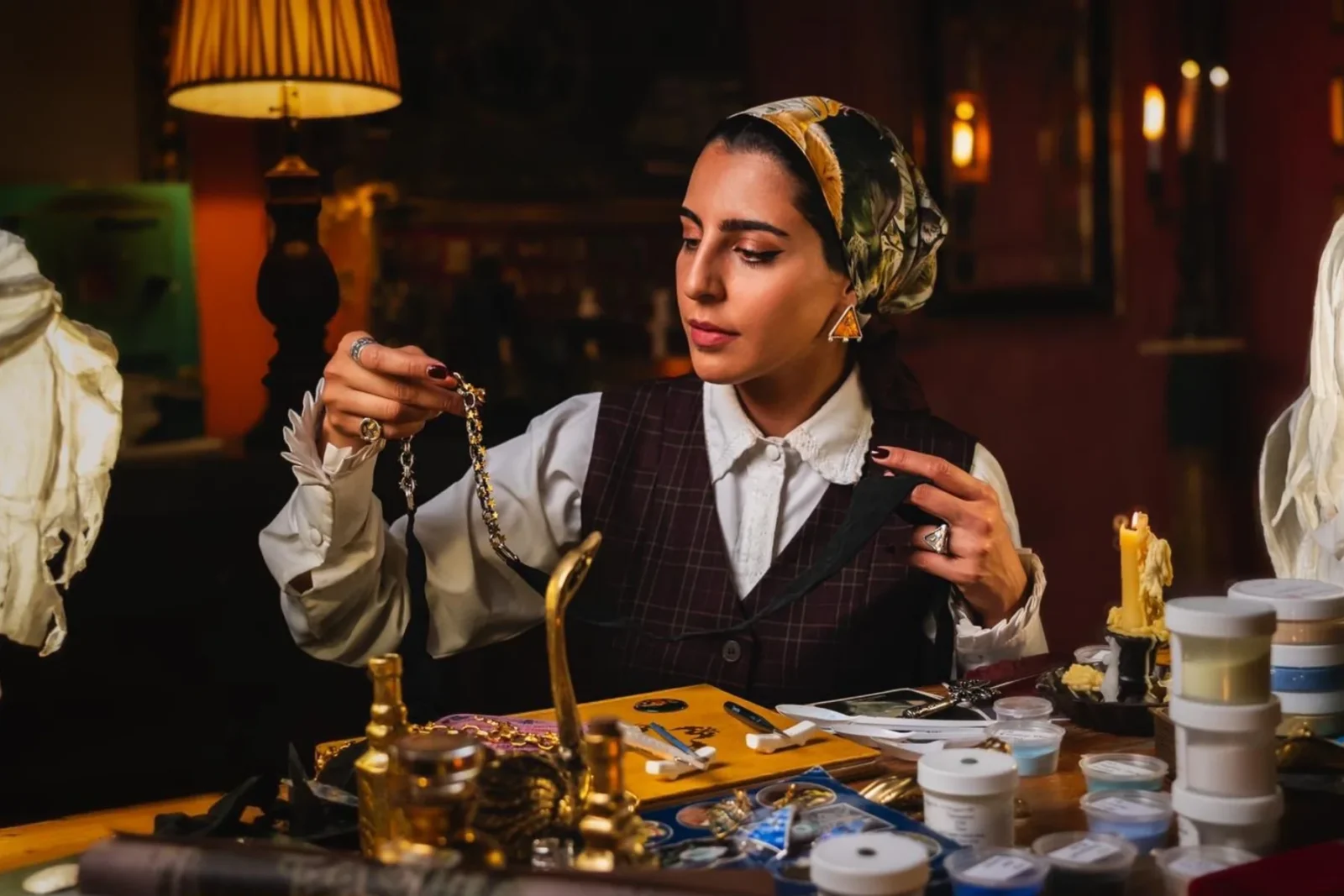
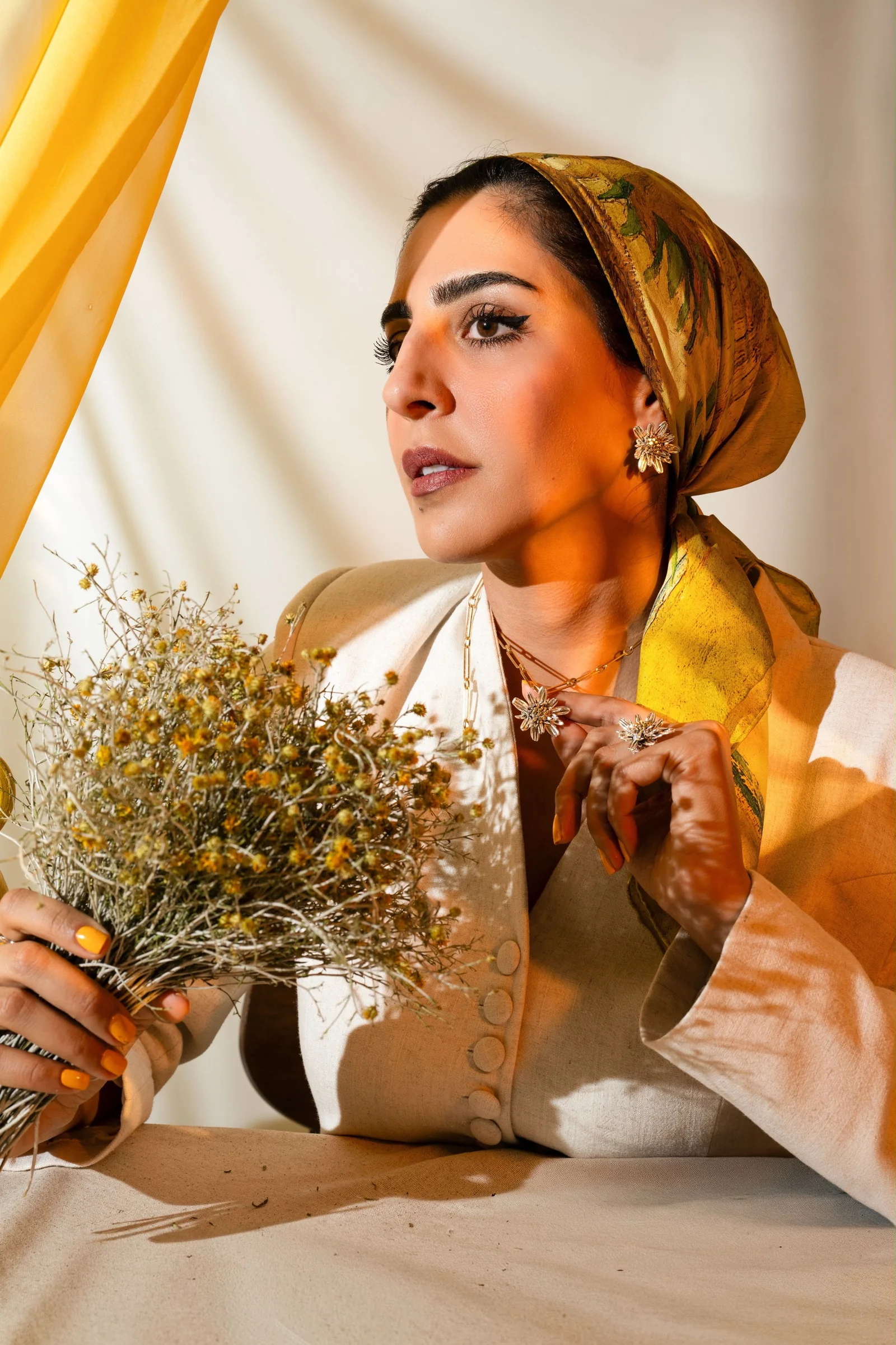
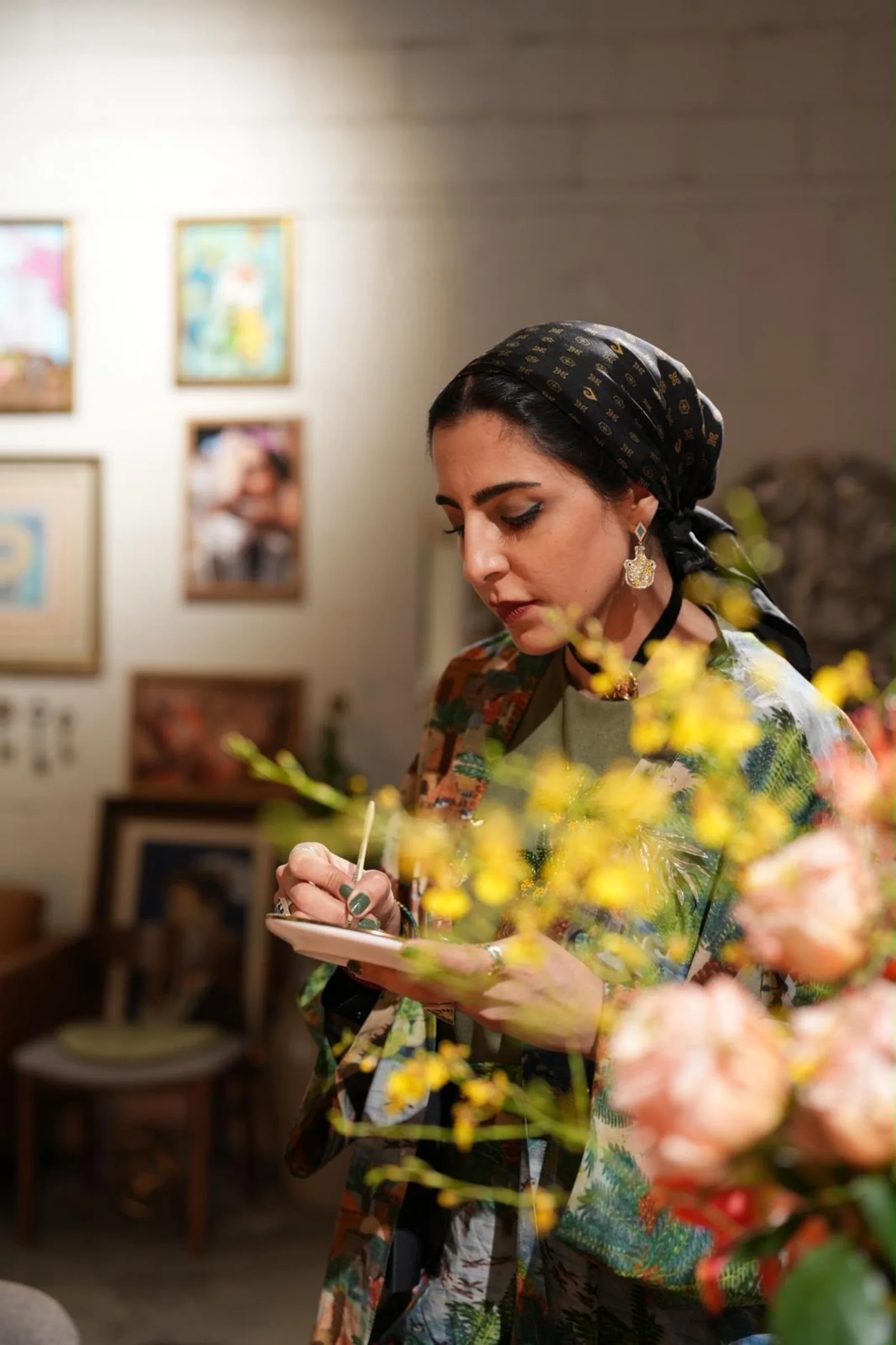
Farah Bastaki was a painter long before jewellery became her language. She worked across mediums, with a particular focus on watercolour, where she developed an instinctive understanding of colour, transparency, layering, and the subtle ways pigments interact. That background would become an unexpected foundation for her work in jewellery. As the Kuwaiti artist and founder of Farbasta, she found in vitreous hot enamel a meeting point between painting and metalwork. Instead of paint and water, her palette became powdered glass, precious metals, and fire.
Philosophy
To tell stories through colour.
Farah Bastaki
The Artist Behind the Jewellery
Glass, Metal, Fire
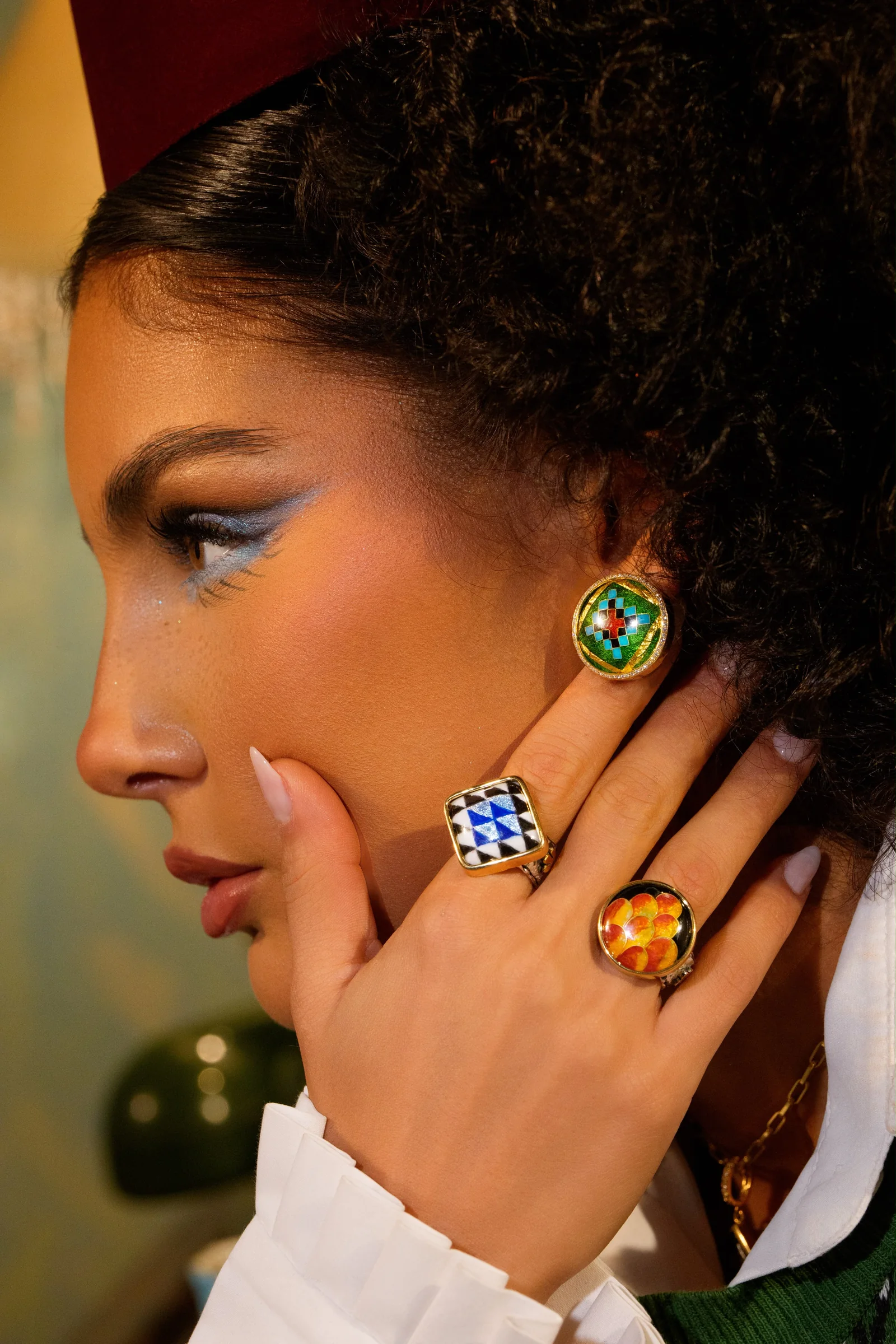
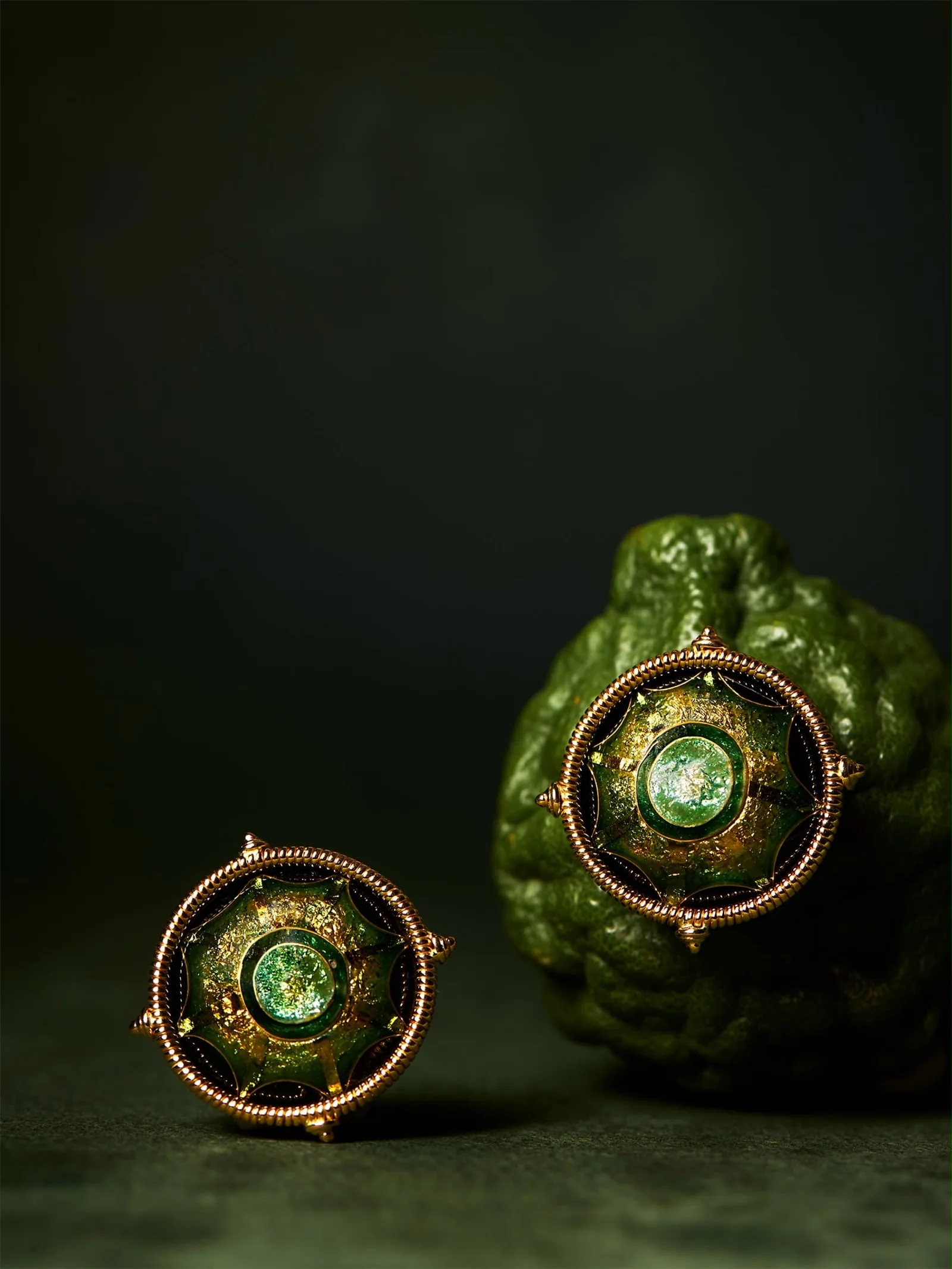
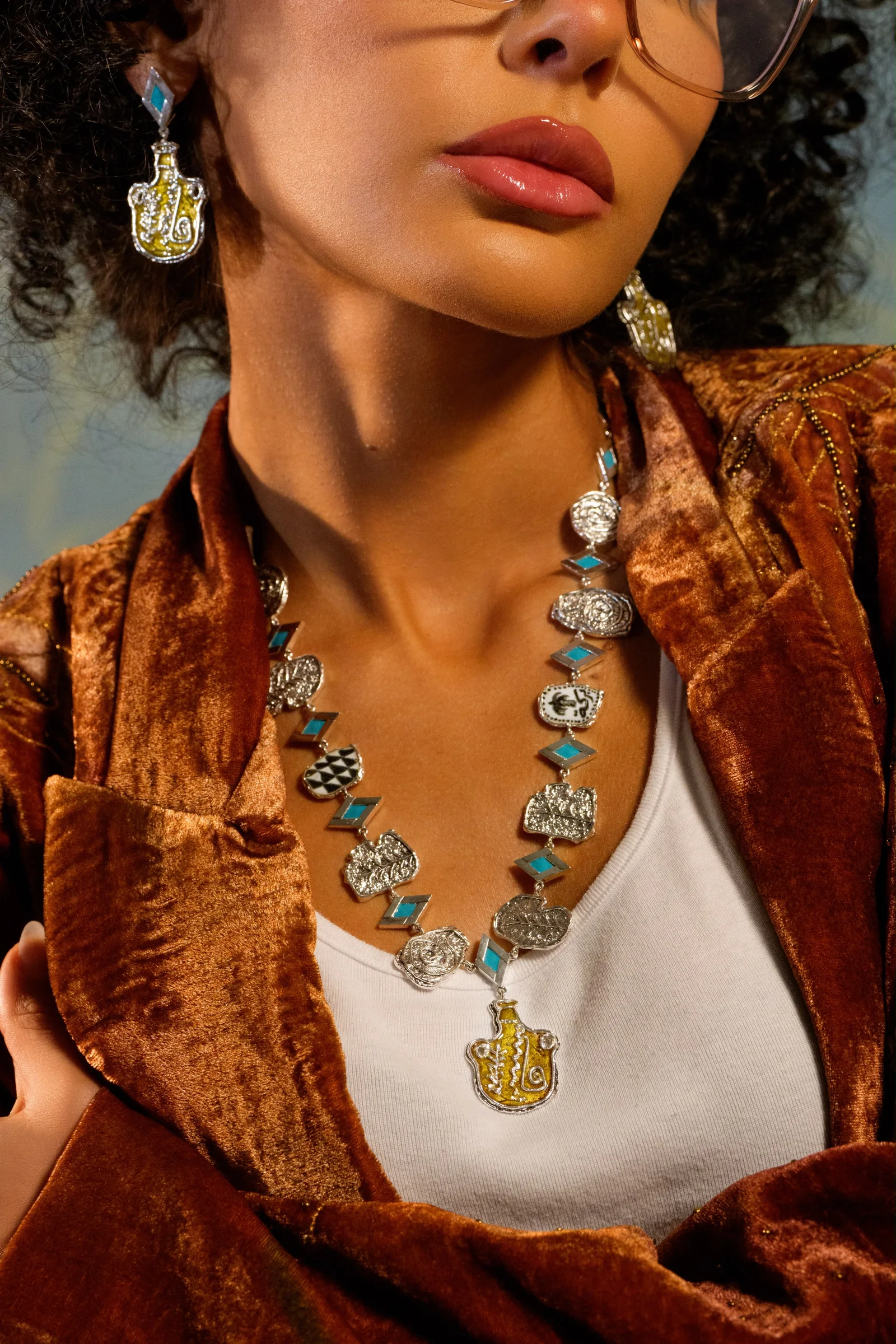
Working primarily with silver, gold and enamel, she explores historic techniques including cloisonné, paillonné and enamel painting. Each piece may pass through the kiln many times, layers of glass fused to metal at high temperatures to build depth, luminosity and colour.
Her jewellery draws from the visual memory of Kuwait and the wider Arab world, from Sadu weaving and Arabic calligraphy to architecture, archaeological motifs, native flowers, and fragments of histories that risk being forgotten. Rather than reproducing heritage, she translates it through her own artistic language into contemporary pieces made to be worn, lived with, and eventually passed on.
Watercolour to Fire
One Eye, Many Mediums
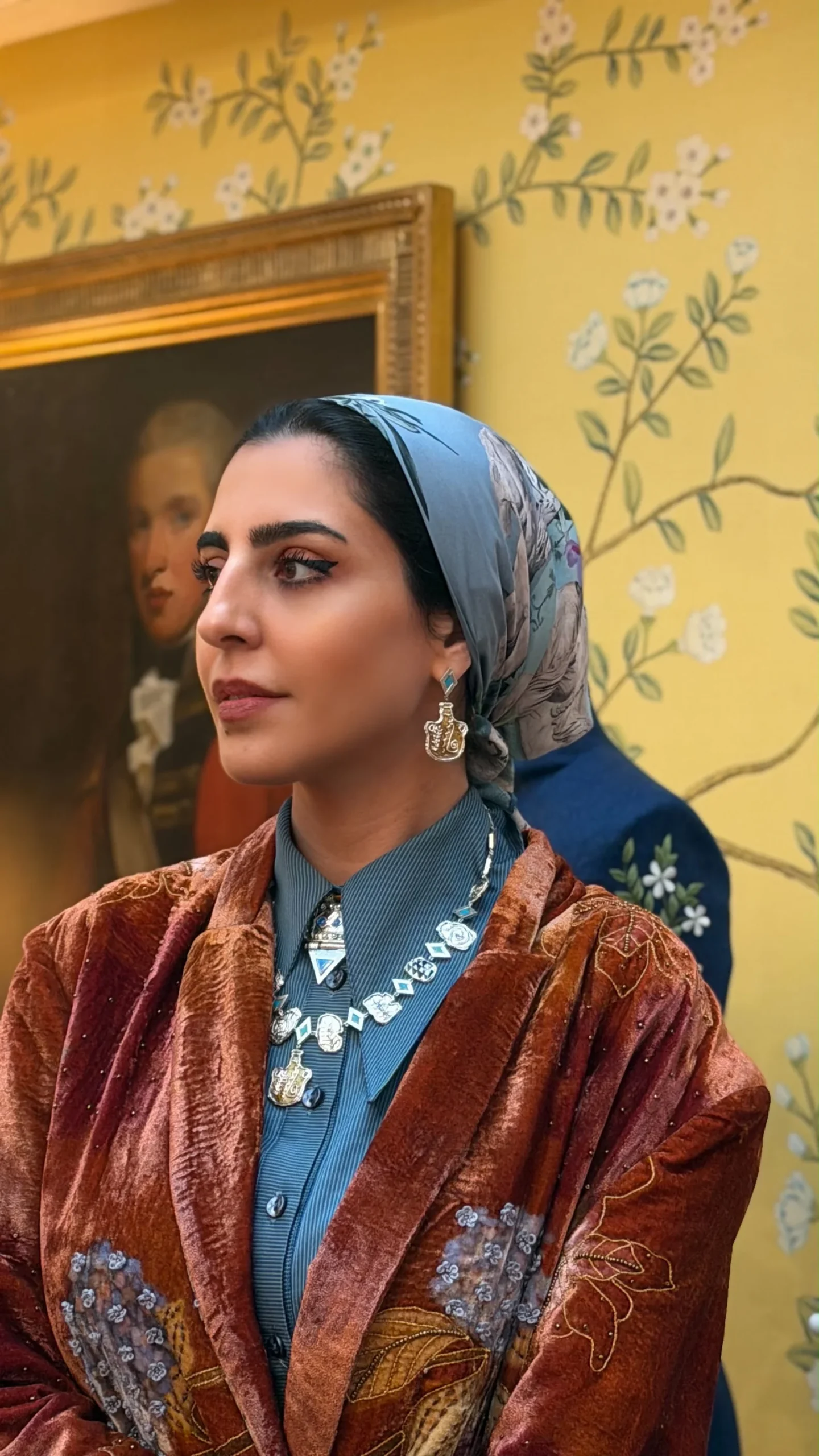
She has always been drawn to connecting different forms of art rather than seeing them as separate. Watercolour taught her how transparent colours interact, how one layer can change the one beneath it, and how to build depth gradually. That understanding, she says, made it far easier to experiment with layering in enamel.
Discovering Hot Enamel
An Old Craft, a Contemporary Eye
When she discovered vitreous enamel, she felt it was the perfect way to bring rich, expressive colour into metal without depending entirely on gemstones, and a more direct way to translate her artistic ideas into jewellery. A long love of Art Nouveau, and the discovery that many of its enamel techniques had become rare, drew her deeper into the craft.
She stays committed to traditional vitreous hot enamel, never modern cold enamel, for the depth and glass-like quality that comes from firing real enamel onto metal. The design, though, does not have to feel traditional. She combines old techniques with contemporary methods such as metal clay, taking inspiration from museums, historical objects and traditional motifs, then translating them into something fresh and relevant.
The Piece
The Delights of Hisham’s Palace
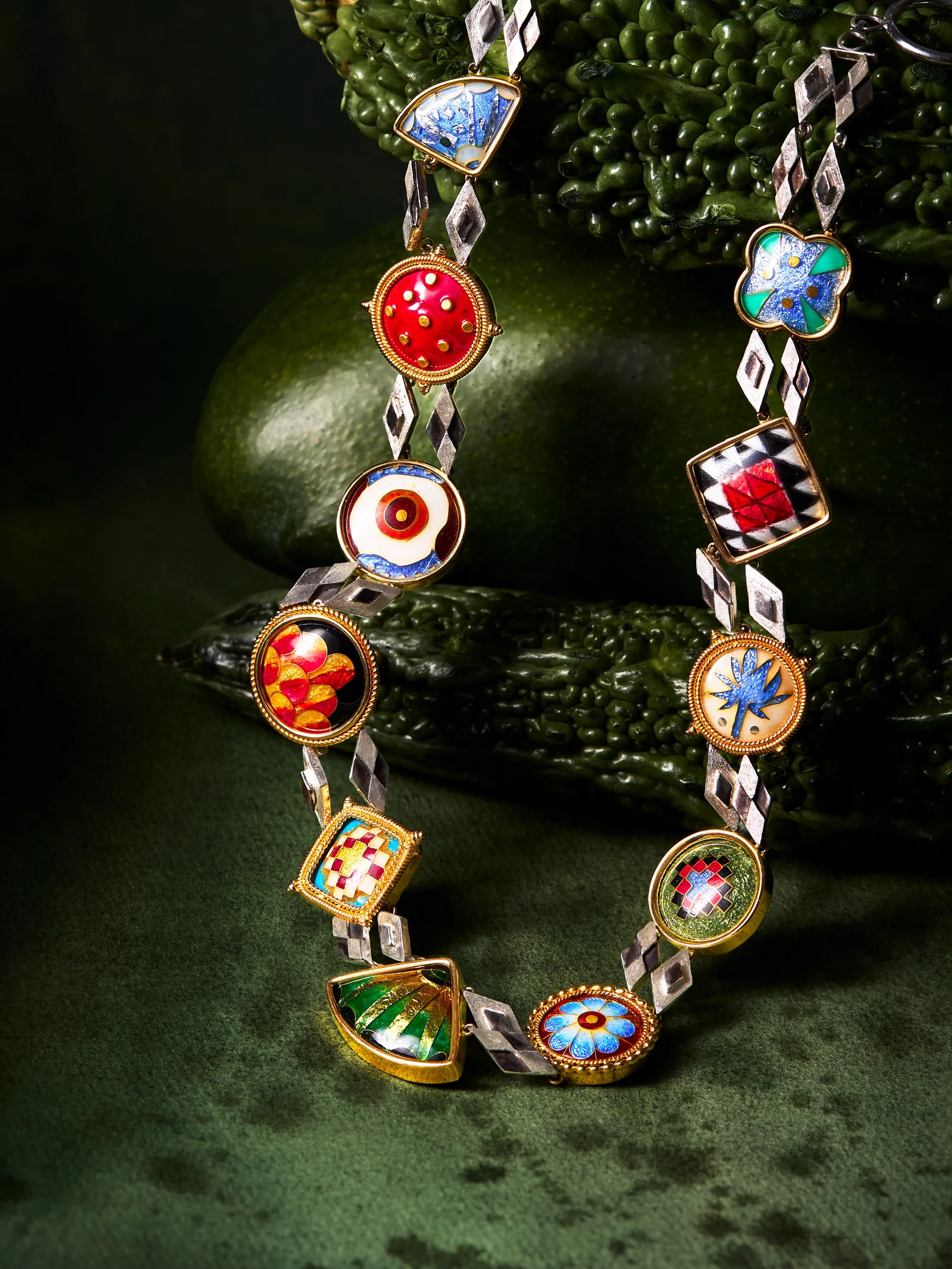
A necklace of eleven individual pieces, each with its own enamel design inspired by the mosaics of Hisham’s Palace. The hardest part was consistency, since handmade enamel and repeated firings make two identical pieces almost impossible. It taught her the balance between precision and the uniqueness of handmade work.
Colour as a Language
The Palette Comes First
Colour, for her, is the starting point. She often imagines the palette before the design itself, because colour sets the mood and personality of a piece, and the design takes shape around it.
Enamel gives her a wider freedom with colour than gemstones allow, and with techniques like enamel painting she can work in fine detail, almost as if painting on a miniature canvas. It lets her use jewellery as an art form, rather than designing around the limits of a stone.
Control and Chance
When Fire Has the Final Say
Hot enamel is unforgiving. Once glass and fire enter, there is always an element she cannot control. It frustrates her at times, yet she compares it to glass against plastic: the depth and richness of true enamel make the patience worthwhile.
Heritage and Memory
Stories Not Yet Told
Arab and Islamic history is rich in art, symbolism and ancient civilisations, and she feels there are still endless stories to tell through contemporary jewellery. Even within Kuwait, much remains unexplored.
One place draws her especially: Failaka Island, and its Hellenistic period, where different cultures and histories intersected. Translating those archaeological influences into jewellery, she believes, could tell a part of Kuwait’s history that people may not immediately associate with the form.
The Method
Beginning With the Story
She begins with the story, and the jewellery follows. Her Arfaj Flower Collection started with the meaning of the Arfaj flower and what it represents in Kuwait, then grew into pieces that stayed wearable while carrying that meaning. The story, she says, gives the piece its soul.
Wearable Art
More Than Adornment
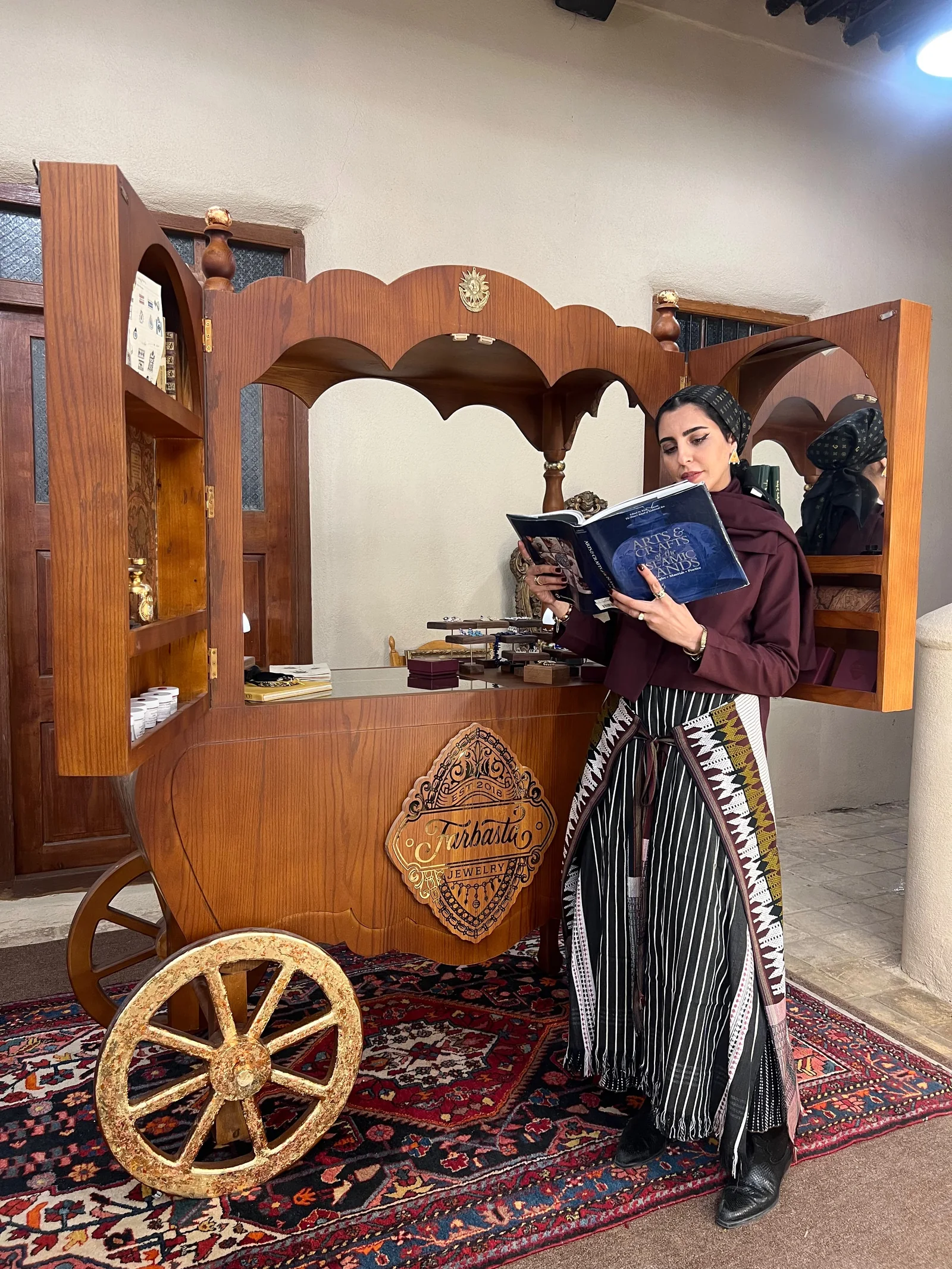
She has always loved the idea of wearable art, jewellery with value beyond its metals or stones. Art Nouveau is her reference, pieces that were miniature works of art where design, craftsmanship and colour mattered as much as the materials.
An heirloom, to her, is not only about material value. It is the story a piece carries, how it was made, where it was shown, who first wore it, and the memories it gathers over time. That mix of craftsmanship, history and personal connection is what makes a piece worth passing on.
Letting Go
A Piece That Keeps Living
When a piece leaves her, she says, it does not simply become an accessory. It becomes a small artwork that continues its life with someone else.
Building Farbasta
Growth Without Losing the Hand
She does not want Farbasta to grow by becoming faster or making more. She would rather grow through recognition, more collectors, international exhibitions and stronger collections, keeping the craftsmanship special. Small editions suit her, because the slowness is part of the value.
In time she can have skilled hands help with stages of production, but the artistic side, the concepts, the colours, the enamel work, stays close to her. Growing the house, she says, should make the work more valuable and recognised, not more mass-produced.
Luxury Today
The Human Touch
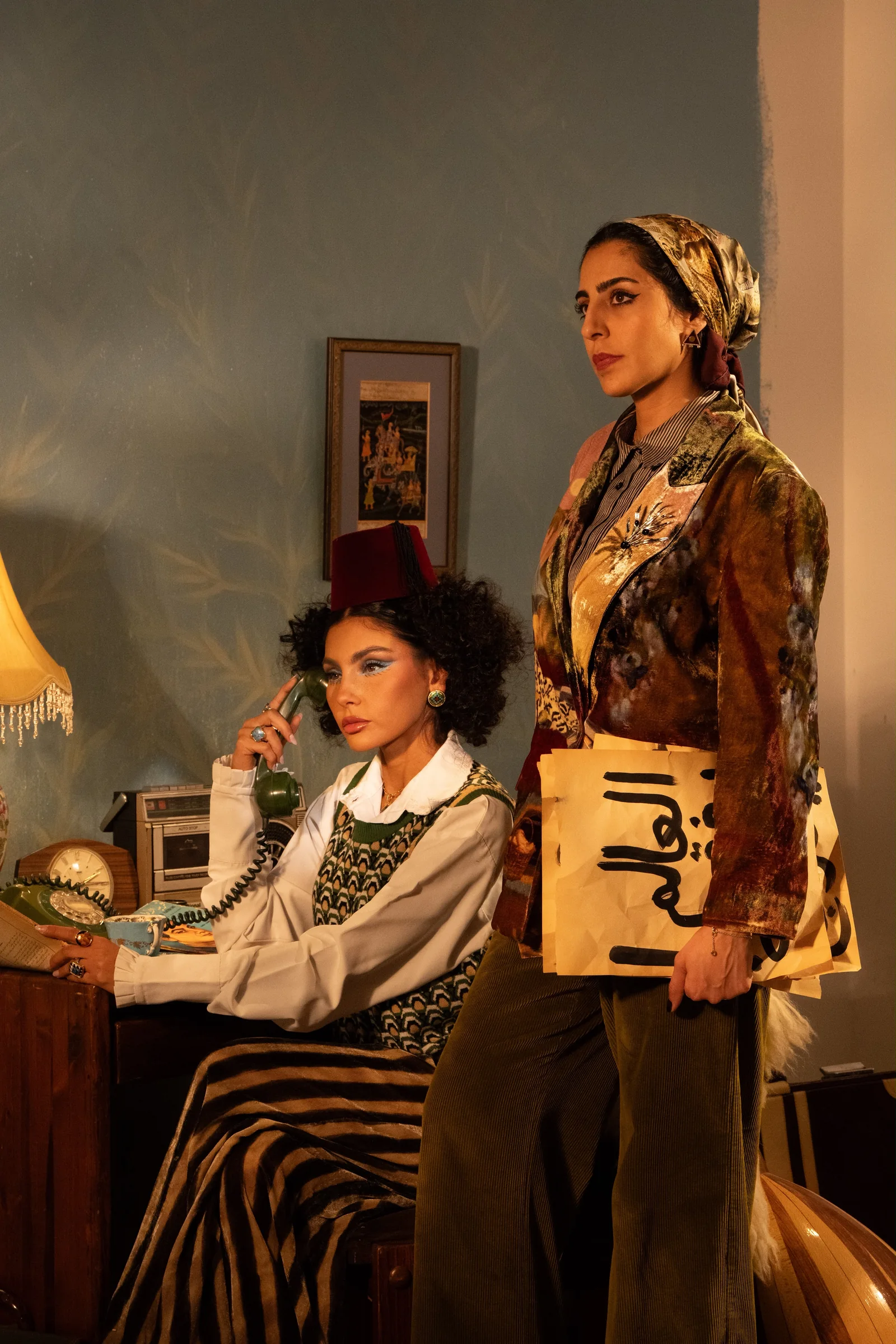
The human touch has become more valuable as it grows rare. Knowing someone spent hours making, experimenting and deciding by hand gives an object a different kind of value. The rarer it becomes, she believes, the more meaningful it will be.
Heritage
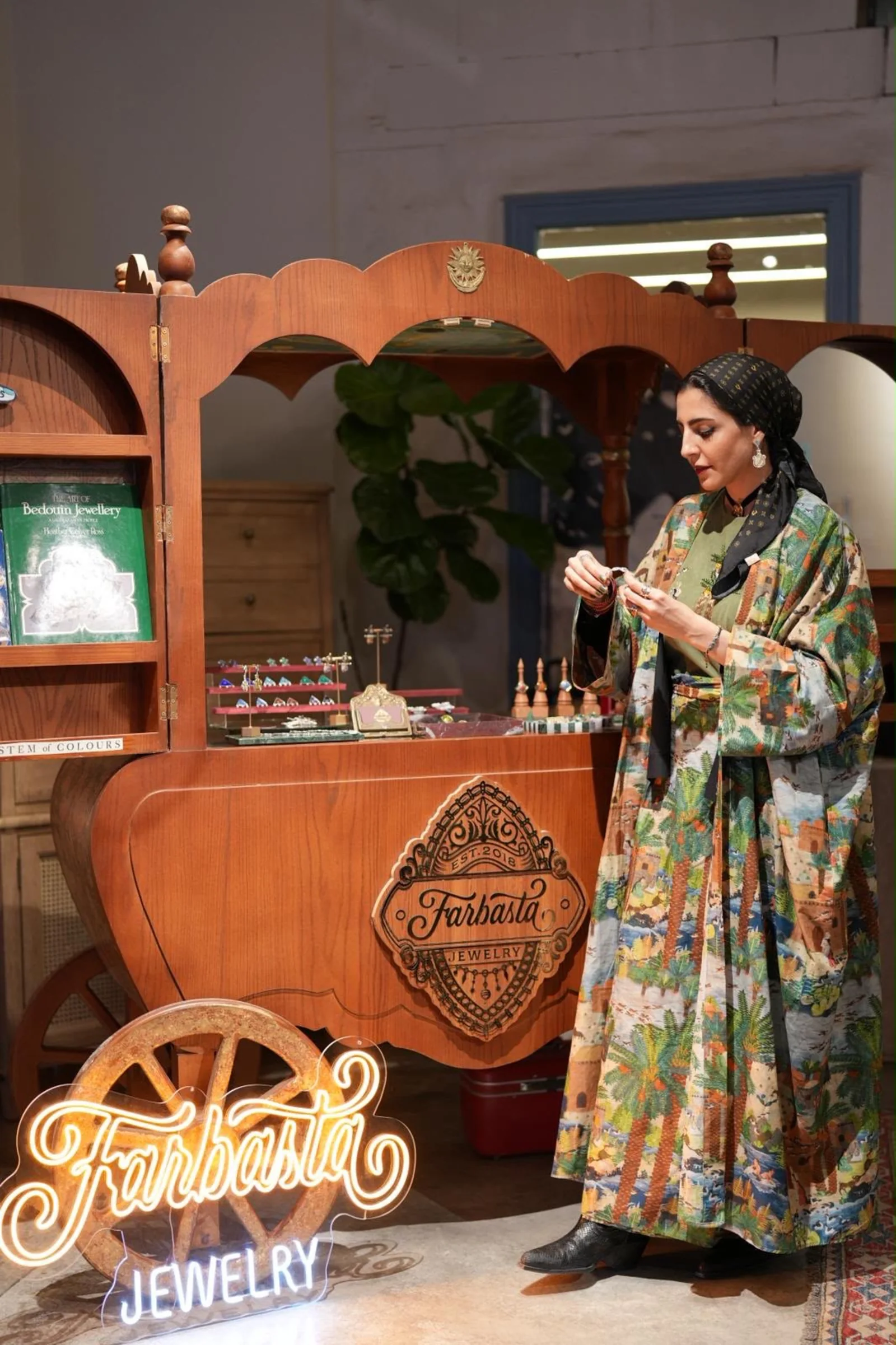
Reviving a rare craft, rather than only admiring what remains of it.
Farah Bastaki
Looking Forward
A Signature Without a Name
She is still learning, and does not believe there is an endpoint in art or craft. She wants to keep mastering enamel painting and cloisonné, and eventually to experiment beyond what exists and develop an approach of her own.
Ten years on, she hopes a Farbasta piece will be recognised without its name, through its colour, craftsmanship and the way it tells a story. Her goal is a visual language unmistakably her own, and a signature the jewellery world can place at a glance.
Quick Fire
Watercolour or enamel?
Watercolour.
Cloisonné or enamel painting?
Cloisonné.
Gold or silver?
Both, mixed.
Opaque or translucent enamel?
Translucent.
Perfect firing or beautiful accident?
Perfect firing.
A colour you could never give up?
Ultramarine blue.
Ancient or contemporary?
Ancient.
A place that changed the way you see colour?
Peru.
The piece you would never sell?
قلادة حماة العرين
Luxury, in one word?
Craftsmanship.
For Boujeez
Ask Farah Bastaki what she is making and she will talk about colour before metal. A painter who found her widest palette in powdered glass and fire, she treats each piece as a small canvas and each collection as a story worth keeping. Her work is a quiet argument for the slow made thing. In an age that prizes speed and the flawless, true luxury may be the hours a hand leaves behind, and the memory a piece carries long after it is worn.